“You’d be able to talk with media about youth issues—youth in church?” I asked, as I was getting to know the possible resources around my work place a couple of years ago. “Yes,” he said . . . “and trans issues, of course.” Looking down at the moment, I willed my head not to snap up: “Of course,” I said, continuing to scribble notes.
Except—of course—until then, I had not known he was a transgender person.
An All-About-Love take on Christianity was my introduction by a couple of gay guys in San Francisco nearly 30 years ago. Even after they planted that seed, it took many years to germinate. Yet, today, after more than 10 years of experience and study in the Christian faith, I remain mystified by those who believe they know that God or Jesus or St. Paul wants gay, lesbian, transgender people excluded from the full life of the church.
Once, in the basement of an affluent St. Paul parish, retired Lutheran Bishop Lowell Erdahl was talking about how he learned to open his heart and mind to gay and lesbian people. An older woman, wearing a vintage Chanel suit, responded: “That’s all wrong. Sex should only be for procreation.”
“Yeah, right,” I thought. “And clothing is only for warmth.”
As a stepmother and aunt and friend and fellow worshipper and colleague and fellow human being to God’s rainbow of gay, lesbian, trans and, yes, straight people, I would like the message of love to go global.
My co-worker, while retaining his staff role, has since gone on to be ordained in the Old Catholic Church of America. (Its primary overlap with the Roman Catholic Church may be respect for traditional style in worship.) Now, starting with a preview gathering July 23, he is planting The House of Transfiguration.
Would this new church be amazing news to the way-too-many people who believe that Christianity is anti-gay? I hope not—but somehow, they are not hearing about the inclusiveness of the United Church of Christ, my own Episcopal Church (almost all parishes anyway), and the Evangelical Lutheran Church in America.
I hope there are a lot more churches out there, too—congregations of many denominations that concern themselves primarily with loving their neighbors—all their neighbors. “You shall love the Lord your God with all your heart, and with all your soul, and with all your strength, and with all your mind; and your neighbor as yourself.” [Luke 10:27 NRSV]
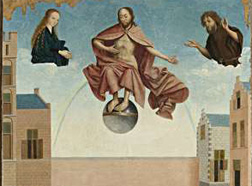
Image cropped from De zeven werken van barmhartigheid, Meester van Alkmaar, 1504, Rijksmuseum collection
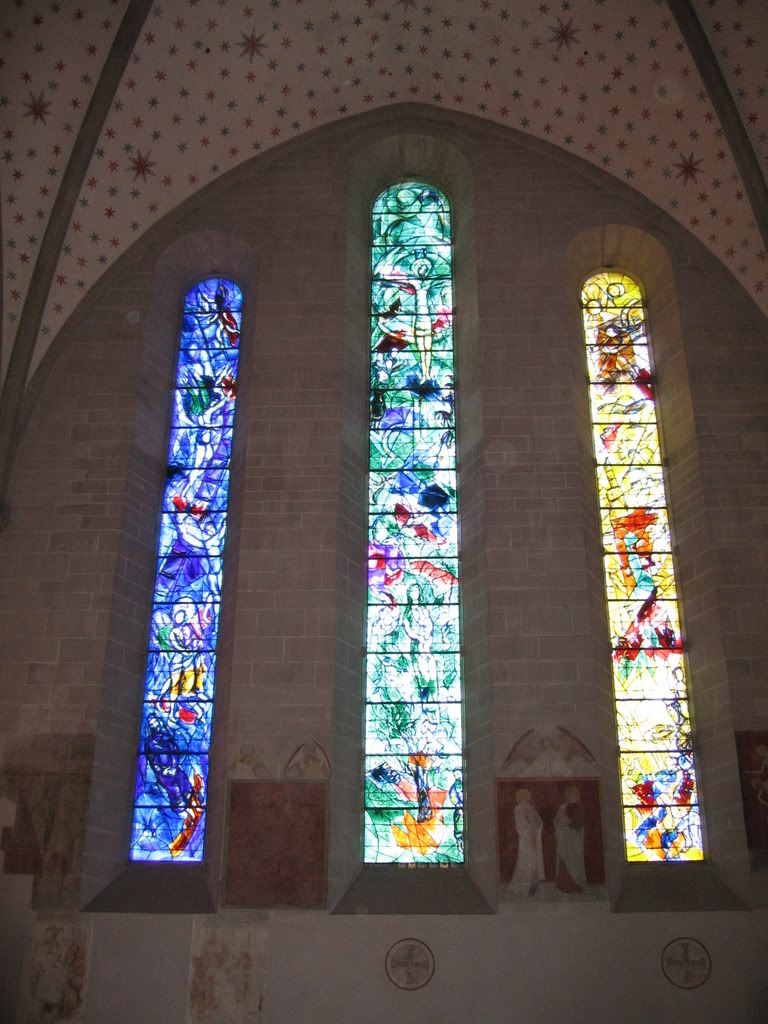
 Allison Campbell Jensen