Feeds:
Posts
Comments

Hawaii, how are ya?

Our friends from church are on their first trip to the Hawaiian Islands. I have been fortunate enough to travel from Minnesota to Hawaii during February — more than once, even — and have celebrated Valentine’s Day on the Big Island with my husband and a coterie of beloved family members. The waiter at Huggo’s is not to be believed: How can he be so good, so funny, so endearing, that all who are in the know ask for him? “Yes, we’d like a reservation for Feb. 14. And we would like to be seated in Island Johnny’s section, please!”

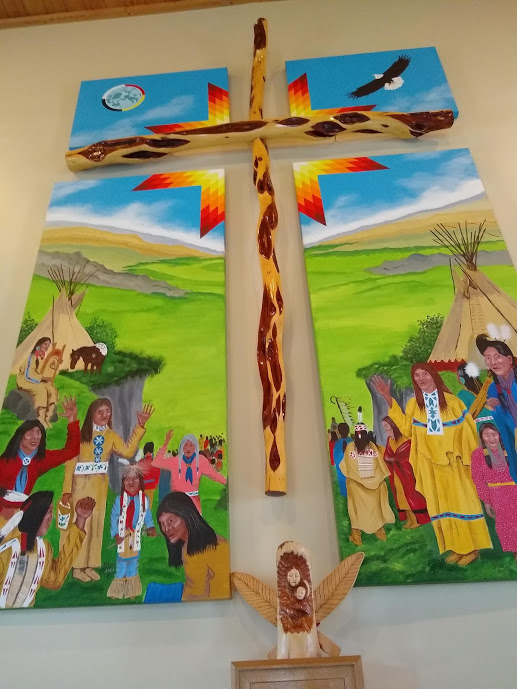
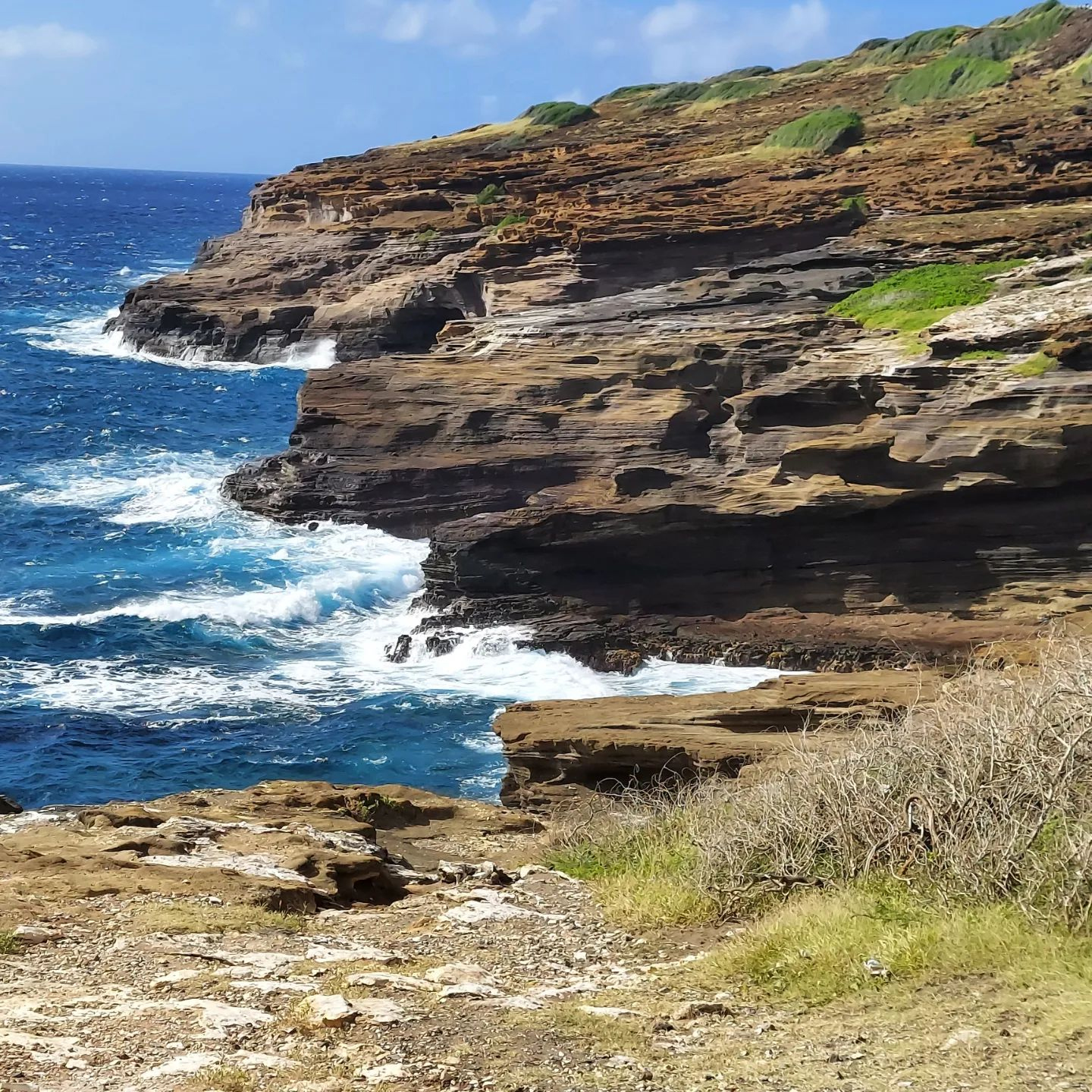
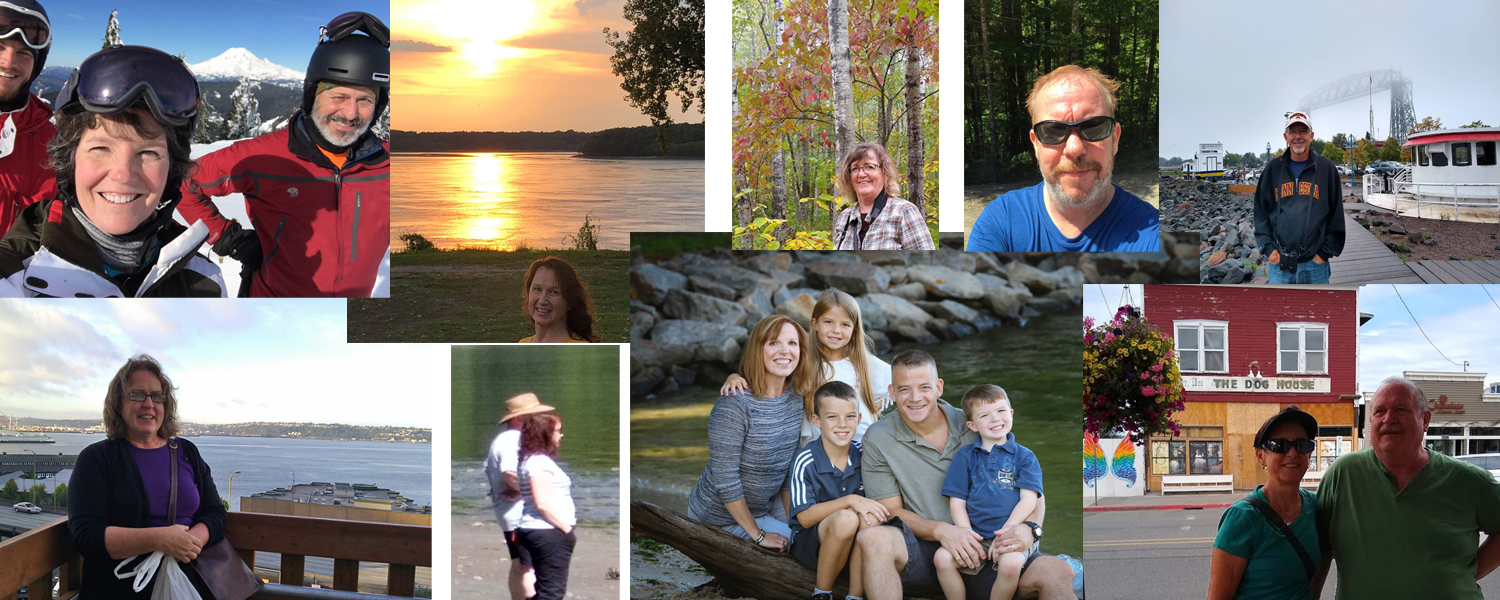
The Ackermans are visiting Oahu right now . . . I borrowed this photo from Kathy’s FB page.

Mickey would ask and, almost always, she would receive her wish. We all would benefit from her care and thoughtfulness and just downright deep knowledge. It’s always so, traveling with Mickey and Jim: They are in-the-know, up-to-speed, ready-to-go, caring, generous, and understand when to give their fellow travelers some space and when to urge the party to get off their duffs and get this party started.

How does she do it? I don’t know but I have a couple of guesses. She’s the eldest daughter of the family, super-responsible, a helper at home when her mom went to work while they were children, the adult child of a man who was loving and kind (but also may have had alcohol issues, may he rest in peace).

Mickey can be blunt and direct, which is refreshing in Minnesota, where indirection and passive-aggressiveness and hiding feelings are defaults. [I love Minnesota, maybe because I hate conflict and would, in general, prefer to paper over differences and move on . . . and I’m not the only one. That Scandinavian reserve can come in handy whilst I take a few minutes to bring my Scots-Irish temper under control. BTW, The cold, sunny winter days are neat, too, as long as you have a heavy coat and boots; snowshoes or cross-country skies help warm a person, too, once you get them out of the basement and put them on.]

Jeff and I have traveled with Mickey and Jim to Hawaii, to London — alas, we did not see the Queen, but we did tour Parliament! — and to southern France, with Jeff’s brother and our sister-in-law, Lynn. Places I might have never seen, if Mickey hadn’t asked: “Say, are you and Jeff available in September to go to London with us?” Are we?! You bet. We will make it so!

So Mickey is my sister-in-law’s sister. She makes me feel that I am one blessed person in my Jensen, Jared and Bailey family connections! That’s another reason to love Minnesota. When I divorced from my first husband a couple of decades back, my brother Rich asked me why I didn’t move back home, meaning Washington State.

Tempting, but after a pause, I replied: “It feels like home here.”

And it feels like home in part because of relatives like Mickey and Lynn, their brothers, and the passel of kids and grandkids to whom they are mom and grandmother. And who are wonderful people in their own right. Mickey, however, deserves accolades as one of the most loving people I know.

Hey, Mickey, how ya doing? Thanks for taking us along to Hawaii, London, France, Arizona, and to your place on the lake! Love ya!

Sisterlies

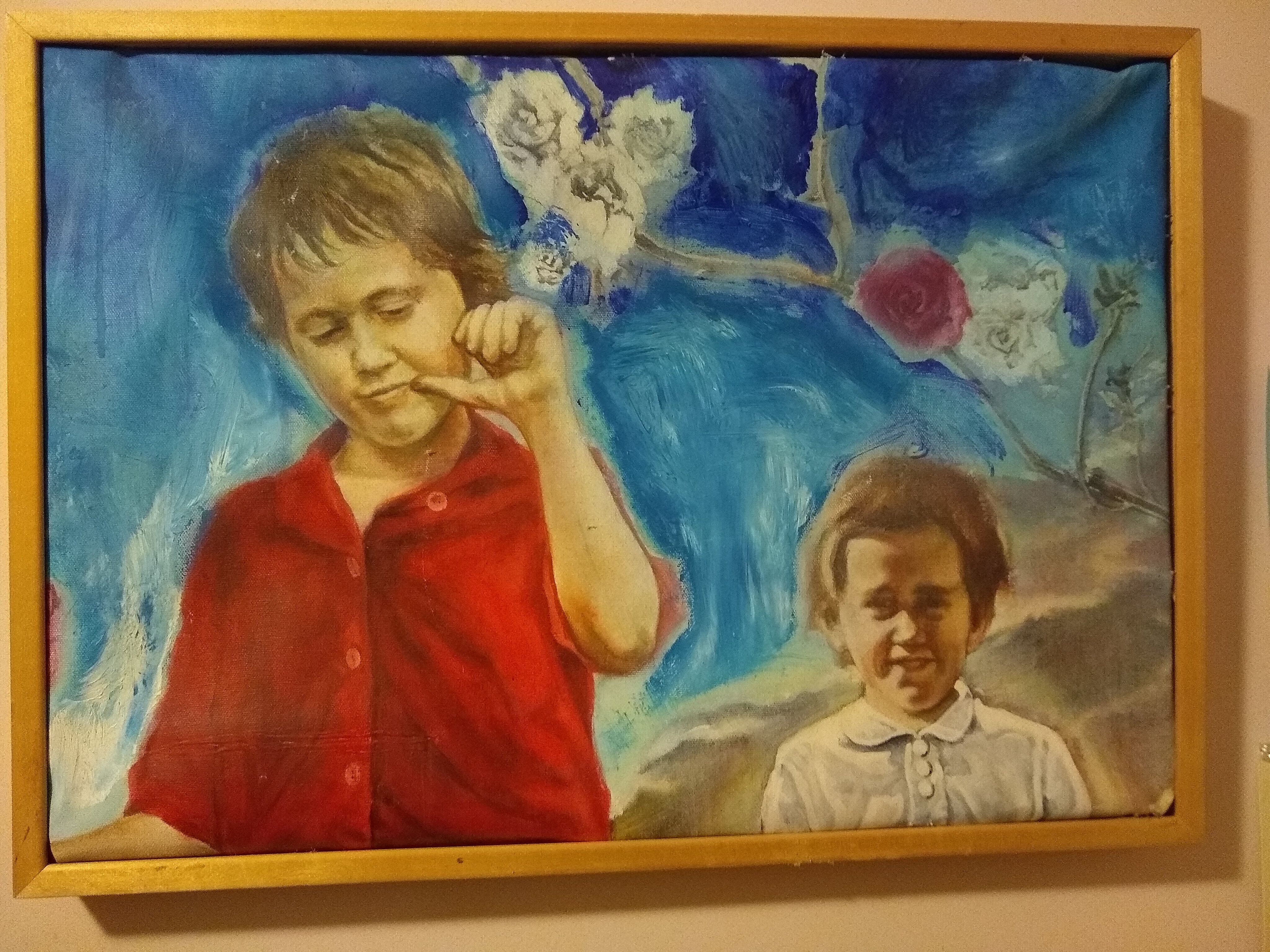
Anne Mary Parker Goedecke and Martha Nancy Goedecke, with roses, in a Kansas skyscape.
Annie and Martha, at The Ranch, which was Dad’s place in Kansas, after our parents’ divorce.

This image of my older sister and I was painted by a friend of Dad’s, Traut was his last name (perhaps? Annie, can you confirm?). The painter had a photo of Anne and me (Martha, at the time) from which to paint, and his style on the Kansas skyscape strikes me as pretty cool.

I like the roses, too; nice symbolism and mirroring, with Annie’s red shirt and my white blouse. “Il n’ya pas des roses sans epines,” as the French say. There are no roses without thorns.

In my relationship with Anne, I’ve experienced both roses and thorns. We have a younger brother, Bobby, and an older brother, Richard, but he was forced to grow up very early. Our parents, Bob and Virginia, split when I was 5, Anne 7, and Rich, 10. Richard had to be, or chose to be, the Man of the House. More about the pressures of that role, from my point of view, another time.

Roses are beautiful gifts, yet beware the thorns; blackberries, the same. Anne and I stumbled into an emotional blackberry bush, full of prickles, after our Mom died. Blackberries thrive on Whidbey Island, where Mom, Rich, Annie, and I moved from Kansas a few years after the split. Oh, yeah, and this guy Dave was along, too; driving the van most of the time. Our new stepdad. If we kids were invited to Dave and Virginia’s wedding ceremony, I surely don’t recall it.

So it goes, as Kurt Vonnegut used to write. Or, as one of my best therapists used to say, “Well, that’s fine but Starting From Today, what are you going to do about it?” The “it” could be a bad memory, hateful feeling, emotional hurts, any of the baggage dropped from a freight train racing out of the past.

In that vein, starting from today, yet looking back I offer this brief excursion into the past to Anne and all our sisterlies: Tracy (Trey-trey), Stephanie (Taffy), Trish (legally, Mary), and Lori (legally, Ellen). Rich and Bobert, I’ll come back to you. (“Oh, no . . . no rush, Allie!”)

Yes, I chose to change my name when I was 18. In Washington State, one simply had to fill out an affidavit at the time, put everything in the new name, and be consistent about using the new name (and never using the former name) for seven years. I was enrolled in Western Washington University at the time, so I went to see the appropriate University official. He told me this change was too drastic; it was a big mistake and I would regret it. And besides, he asked, how did my parents feel about me going from Martha Nancy Goedecke to Allison Artemis Campbell?

Fine, I said. Campbell is a family name on my mother’s side, so she likes it. And I’ll go by my nickname Allie most of the time, which is a reference to “Catcher in the Rye,” so a literary allusion, you see . . . And my Dad will adjust.

Well, Dad’s response just about knocked me down. I will look in my old papers and see if I can find the original letter. This is how I remember it beginning:

Martha,

Allison

You daughters do amazing things when you turn 18. Annie produced a 8-pound boy and I expect you will produce an 8-pound book.

I never like the name Goedecke. Too long and no one can pronounce it correctly. . . .

Well, hell. I couldn’t even shock the old guy, even though he walked out of my high school graduation speech while I was giving it. Something offended him. Maybe it was the idea that I cribbed from a lady’s letter to Dear Abby — well, I cited the person! Probably, it was the idea I was promoting: That this elderly person had looked back at her life and said, if I had it to do over again, I’d eat more ice cream . . . I’d smell more roses.

Now, at 63 years of age (how did I get here?), I can see how that might be offensive to a man driven by ambition and bedeviled by mental illness. I was deeply hurt at the time, ashamed and embarassed by my crazy Dad. There were only 70 of us in our high school class — dear friends, why did you all have to choose me as the Class Choice Speaker?

I still abhor public speaking.

Annie, Tracy, Steph, Trish, Lori, sisterlies, let’s get together again soon. Let’s go out for ice cream. Let’s find a rose garden and wander, smelling, admiring their beauty — and keeping our fingers away from the thorns.

This content is password-protected. To view it, please enter the password below.

Three things

Coming in August to Minnesota for the first time, we headed the next day to Lowertown St. Paul to roam the farmers’ market stalls, heavy with vegetables and fragrant with herbs. I bought sweet corn fresher and more delicious than any I’d ever had before. (That first time, did I eat just two ears? Or maybe it was three? Memory doesn’t serve, except for butter dripping off my fingers.)

Then the end of August rolled around and we visited the State Fair. “Visited”? How about dove into the Great Minnesota mosh pit?  My then-husband and his Norwegian-heritage family were famously introverted — except brother Brad, who lived in Wisconsin, and, well, maybe you know about small-town Wisconsin? Seems like there are two bars for every church? Brad knew. (Anyhoo.)

So many people! Thousands of people. In crowds. Some not wearing a whole lot of clothing. By afternoon, many of them sweaty, yet happy, or determined, or leaning over to wipe butter or milk or chocolate or cheese curds off the chin or shirt of a younger family member. Sometimes even jostling a bit, seeking a better look at the Northern Pike or Walleye in the concrete pond outside the DNR Building.

Minnesota’s State Fair crowd scene was infamously, decadently described by Jonathan Raban, an otherwise exemplary writer in “Old Glory: An American Voyage.” The Brit captured the scene well enough to make a person cringe (particularly an adopted Minnesotan). The January 2022 death of Louie Anderson, beloved Minnesota comedian, still fresh in my mind, I suggest you read about the beginning of his voyage down the Mississippi River with Louie’s fat jokes in mind. On the other hand, I highly recommend “Bad Land: An American Romance.” It is a brilliant book of history, reportage, and Americana.

Ooops. A little tangent there. Steering away from the detour to Tangent, Oregon, let’s return to the three things.

Compared with the State Fair crowds, it was only when I ventured out at intermission during my first Minnesota Orchestra concert that I was more overwhelmed by Minnesotans in proximity that they otherwise typically seem to avoid. I mean: These people may have invented the sideways, stiff-arm near-hug (useful to express affection in our pandemic times)! But during intermission, they mingled, crushed, hollered into each others’ 6 foot off the ground ears, and towered over me.  So loud! And the orchestra wasn’t even playing. I couldn’t hear actual words; just a Minnesota Scandinavian-accented low mumble or grumble. Hard to tell from 5 foot, 1/2 inch.

(Minnesota’s one-time Miss America, Gretchen Carlson, claims she is 5’3” Humph; in heels, I guess). These classical music lovers all seemed to loom at 5’10” and above — way above. Gosh, some of them seemed to be about 6’6” !!??

It was a relief to regain my seat. Maybe the other short people knew to stay out of the lobby. Whew.

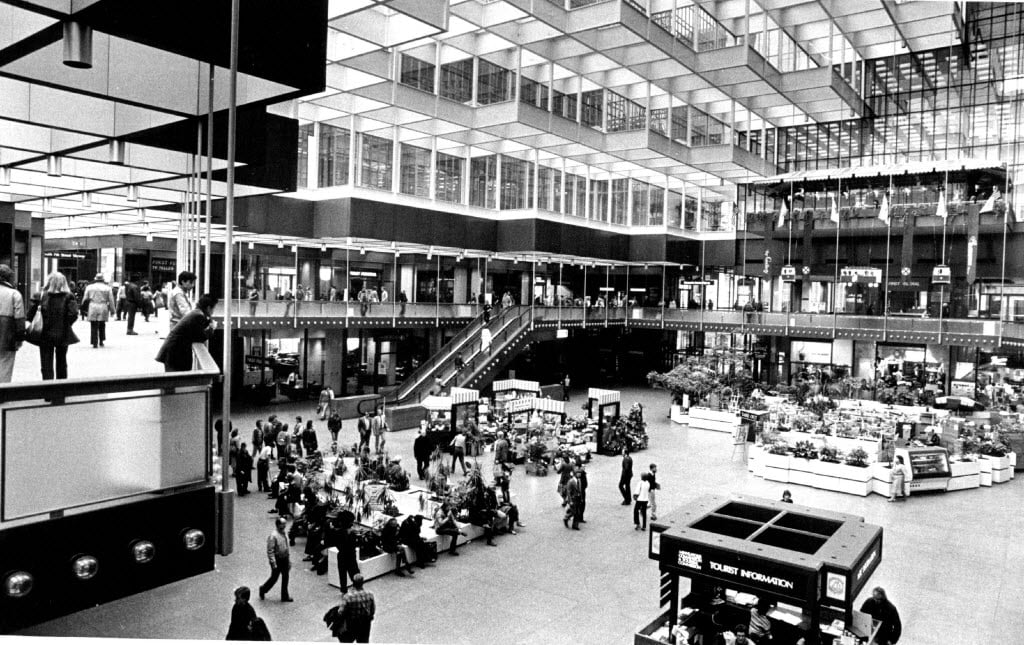
Finally, the IDS Crystal Court, which my friend Rick Nelson reminded me of today on his Facebook posts with many historic photos and images of a newly renovated heart of downtown Minneapolis. Whoever heard of a town square indoors? Weelllll, when January’s low temps dip below zero and the wind is howling south from the Arctic, it begins to seem like a smart idea. I first saw it in fall, which tends to be a clement, even beguiling, season the land of 10,000 Lakes and quite a few maples turning scarlet and orange and yellow, so the penny did not drop for me right away.

Later, when I was working downtown, hustling through the skyway habitrails to grab lunch or check out a sale at Dayton’s (oh . . . Dayton’s), the expanse of space and sky and water in the Crystal Court was a welcome to a larger embrace, a bigger influence, a place to slow one’s steps and take in all the people. Like the State Fair, except most folks were in their suits or dresses or heels or Hubert White shirts.

It was a classy place to rendezvous — you do know there’s a Mary Tyler Moore table overlooking the Crystal Court from a balcony in the Basil’s restaurant? Named for a woman who never lived in Minnesota but came to represent Minnesota to the rest of the country: Smart, charmy, corny, a little goofy, and, by gum, good-hearted! Time to toss your tams, everyone!

Well, the Crystal Court still strikes me as a bit ostentatious for a people who work so hard to appear humble and to pretend they don’t have a $5 million home on Lake Minnetonka, a nice pontoon boat for a ride around The Lake, or a swanky Summit Avenue address in St. Paul. But, when company is coming, we like to get spruced up a bit.

Ope! I titled this “Three Things,” but I’ve included at least four. Just got carried away; even after quite a while living in Minnesota, I’m still “not from here.”

“Women in Minneapolis wear sensible shoes” — somehow, this is a bad thing? Yet 30-plus years ago, with very few snow days under my boots, I hardly knew what was meant by “sensible” in the article I was proofreading.

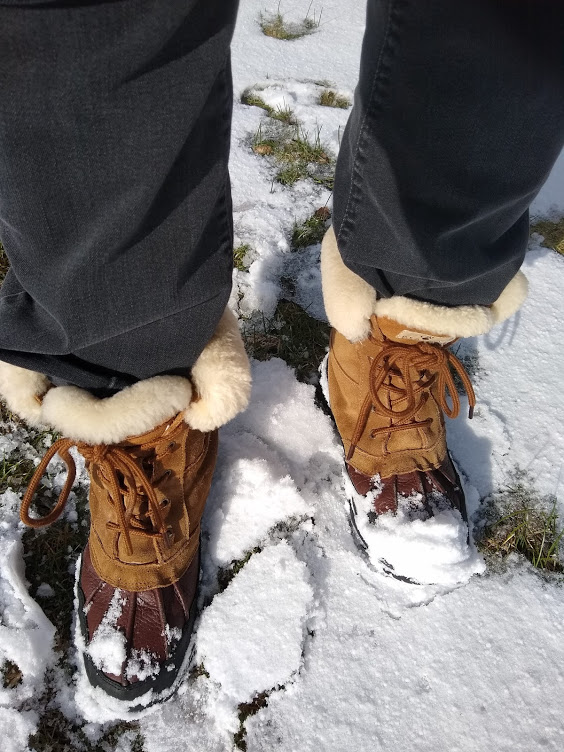
Now, I still may not be fully acclimated to Minnesota but am better prepared for temperatures below freezing and wind chills dropping the “feel like” to 19 degrees: as evidenced by my sensible boots. Yes, Minnesota friends, I know that 19 degrees above zero is no big deal — but on April 14? The see-saw between winter snow flurries and spring sun showers confuses a body.

It all depends on which journey we are taking, of course, but we all need something for the trip, whether they be sensible shoes or a sense of purpose. One friend’s journey on this Earth stopped at 10 Monday night. His wife was with him, hand on his heart, hearing the final beat and then . . . silence. We don’t know what our final journeys will look like.

Still, wherever I go, I find a writer has been there before me, even in considering the passage from life into death. In Peace Like a River, Leif Enger paints a picture of heaven as a beautiful meadow where he meets his father and others. Louise Erdrich  portrays the spirit of a troubled father seeking to drag a daughter into his grave during his three-day death journey in The Night Watchman. And there is the ancient prediction, attributed to St. Paul: “Now we see but a poor reflection as in a mirror; then we shall see face to face. Now I know in part; then I shall know fully, even as I am fully known.” (1 Corinthians 13:12, NIV)

This Biblical reference would not have been familiar to me before I began my journey as a Christian. The first steps culminated in my baptism on Easter Eve in April 1999. And I have been see-sawing along ever since, studying the Bible, yes, and learning what it means to be a follower of Jesus along a path made meandering by my own clumsy steps.

In 2020, we traveled through Holy Week and just finished with Lent on Sunday, April 12. As I moved onward from my baptism, we now commence this year’s Eastertide journey. If you missed the Easter service from the National Cathedral, you can watch it here. After all, each year, we begin again; each day, we begin again . . . until we come to the end of our journey.

Remembering Brian

Dayton holidaySeeing the holiday window dressings for the Dayton’s Project, I wondered: What would Brian Anderson, the not-to-be-beat booster for Minneapolis, have made of them? These sparkling, 3-D ads were a lot more attractive than plywood but served the same purpose: boarding up windows in an empty building. After its nearly 100 years as the Dayton’s department store, a few of its now-ghostly eight floors are to be filled with food experiences. Someday. For months, I’ve caught occasional glimpses of construction lamps turned on inside to indicate people may be working.

But maybe, as Brian died 10 years ago this coming March, this retail-renewal project would look very different to him? Even with this project’s terribly slow progress, I suspect he would have loved its goal of reviving a part of downtown.

Editor Brian was a Maglite on my bumbling path from MPLS.ST.PAUL magazine intern (see Speak Up) to a stint as its managing editor (with detours in Pasadena, state government and the University of Minnesota along the way). And the magazine he edited for 33 years shone its spotlight on TV and radio personalities (Don Shelby, Pat Miles, Garrison Keillor and Gretchen Carlson—hello!), Top Doctors, Best Restaurants and weighty topics—the American Indian Movement, unsolved murders and climate change.

During the monthly cover meetings, Brian focused on developing the punchiest cover lines, refining the images for the newsstand and creating the combination to make people pause and pick up MPLS.ST.PAUL and read these intriguing, entertaining and insider-y stories. (For a taste of my experience, read the running-pace view into the life of an editorial underling with ambitions limned by Maggie O’Farrell in I Am, I Am, I Am: Seventeen Brushes with Death, pp.176-177.)

I loved the striving for excellence, the intense atmosphere and my brilliant, often quirky, colleagues. Our boss Brian was impeccable in suits and manners, seemingly unflappable, quick to highlight a trend and too modest to boast about it. He appeared to epitomize a down-to-earth Minnesotan guy. In Brian’s Star Tribune obituary, which had a dual byline of Tim Harlow and former MPLS.ST.PAUL magazine managing editor Claude Peck, his business partner Gary Johnson said that Brian set the tone for the magazine with his decency. “He was one of the steadiest presences I’ve ever been around,” Johnson said. “He was an absolute beam of light.”

Sometimes being in that beam of light was uncomfortable, however. Brian could be blunt—like the time he called a managing editor relatively new to the position on the carpet. Literally.

He called me on the phone to come to his office; once I was there, he did not ask me to sit down. “Let me read you something from this issue of the magazine,” Brian said: “‘former president Walter Mondale.’” Suddenly I experienced the cliché: my heart jumped into my throat. After a deep breath, I said of our former Minnesota senator and U.S. Vice President, who in the 1984 presidential election lost to Ronald Reagan: “Well, he should have been!” Brian laughed. I left his corner office shamed and determined to be a better fact-checker.

I didn’t know then that Brian had served as Senator Walter Mondale’s press secretary and speechwriter before he joined the magazine; I only learned this while reading his obituary. I like to think he told his old boss Fritz Mondale about my dressing-down, as Brian liked to joke. During his struggle with leukemia, he wrote what turned out to be his final, mid-winter CaringBridge post: “I’ve also been doing my part to spur the economy. . . . I bet I’m one of the few people last month to buy lakefront property. Of course, in my case it’s only the length and width of a casket, but it does overlook a lake in Lakewood Cemetery.” (Source: MPR News, March 16, 2010)

Shortly after I had returned to the MSP Communications fold, Brian died. In the office, Gary called us all together to tell us the news. Even though Brian had been quite ill for months, we bowed our heads and shared gasps, tears, murmurs of pain.

Yet now even 10 years on, from his ashes, light still arises. I hope that I, having been mentored as so many were by Brian, may continue to carry forward some of his light of positivity, steadiness and heck, yeah, even boosterism. And, when in doubt, to ask: “What would Brian do?”

What is the Golden Rule? the teacher asked us. The other kids in my second-grade class were silent, momentarily stilled, so I piped up: “Stop, look and listen.” Um, this was not the rule she was looking for at the time, although not a terrible choice.

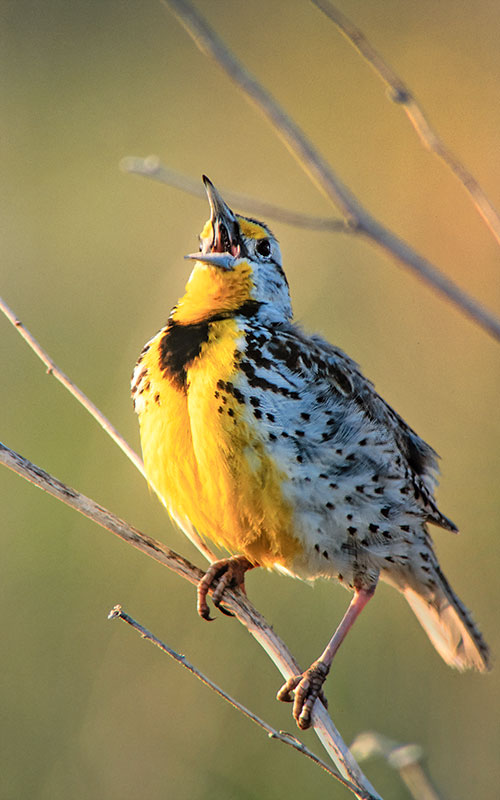
“Stop, look and listen” is what we did Memorial Day weekend 2019, tooling around the southwest corner of Minnesota—we being me, my husband, trip leaders Kim Eckert and Craig Mandel and 20 birder friends. One morning, our car stopped for a meadowlark, perched on a fence post. No doubt we listened because that bird’s song could determine the answer to the usual Minnesota birder question: “Is it an Eastern Meadowlark or a Western?”Meadowlark.JimBrandenburg

Yet did we pause a bit before the usual question was asked? Perhaps to admire the dapper V embellishing his yellow breast? Or perhaps, even before categorizing the species, to enjoy his sweet song? It’s “the sound of the prairie,” according to renowned photographer Jim Brandenburg. (The photo of the meadowlark is his, taken in Brandenburg’s original stomping grounds near Luverne.)

Perhaps we stopped a little longer than usual because there are fewer of our Meadowlark friends to look at and to listen to—half the numbers that birdwatchers spotted in the 1970s. They are among the nearly 3 billion birds that have disappeared in recent decades, according to the Cornell Laboratory of Ornithology.

On this Minnesota Birding Weekend, we also stopped to look at a family of Swainson’s Hawks near Touch the Sky Prairie, which Brandenburg helped protect. Because one person thought he spotted a Common Loon, a small group of us stopped by ponds next to a gravel road in southern Rock County. The landowner drove up on his ATV to find out what we were up to; those ponds had been his gravel pits two years ago. All the unrelenting rain had filled them. We stopped on a rural road in Jackson County because so much rain had been falling that a one-time pond fattened into a lake, closing the road.

It was clear in late May that a lot of fields intended for corn and soybeans had not yet been planted. This fall, with the state heading for a new record annual rainfall, I wondered what had happened, so I wrote to the Extension office in Rock County. “This has been a rough year for farming,” Lizabeth Stahl wrote back Oct. 9. Almost 9.5 percent of the farm fields were not planted, she wrote—those can be claimed for insurance purposes, however—and most were planted later than usual because of all the rain. “It will be a long, late harvest, and farmers are looking at added costs to dry corn since we are running out of time for the crop to dry down in the field before harvest.” Commodity prices are poor, she added; “this will be a year hopefully we don’t repeat!”

Unfortunately, this ill weather likely will repeat because scientists figure the overwhelming rainfall this year in Minnesota is part of the pattern caused by global climate change. California is burning up right now, which is insistently connected to the climate crisis. And in Minnesota, the climate crisis is right here, too, flooding basements in the Twin Cities and super-soaking fields in southern and western Minnesota.

“Well, is that my problem?” you might ask. Yes, it is. It’s our problem because all of us contribute to the greenhouse gases in our atmosphere. It’s our problem—and it’s one we can address with better choices. The Cornell Lab offers seven simple actions to help birds; to help our planet, I urge you to consider additional choices.

  • Change how you get around: Drive less; carpool; bicycle; walk; take public transportation; when it comes time for a new car, choose a low- or zero-emissions vehicle.
  • Change what you eat: In the United States, 40 percent of food goes to the landfill—wasting the fuel, land used and human intelligence used to produce it and bring it to market. Lean toward a plant-rich diet, with less beef (or grass-fed beef), if possible. Find out where your food comes from, because locally grown has a smaller carbon footprint.
  • Change your spending: Follow the money—your money—and ask pension fund managers or financial advisors to extricate your retirement funds from fossil fuels. Big Oil might not care—not right away, certainly—but you will be investing consistent with your values, which just makes sense.

Years ago, in that second-grade classroom in Parsons, I learned that the Meadowlark is the state bird of Kansas. We also sang Home on the Range, celebrating a state “where seldom is heard a discouraging word, and the sky is not cloudy all day.” Discouraging words are not what we need, facing a world in crisis; we need to learn more, together.

That’s what happened when I and 1,100 of my new friends participated in the August Climate Reality Project training. Vice President Al Gore’s presentation was riveting, even at 2.5 hours and more than 600 PowerPoint slides. The other presenters included so many standouts, from Dr. Jonathan Foley of Project Drawdown to Mayors Jacob Frey and Melvin Carter, who are committed to a clean-energy future for our Twin Cities. Now as a trained Climate Reality Leader, I have committed to #LeadOnClimate—and all of us have access to all of Vice President Gore’s amazing slides.

So even bookish types like me find there is a time when I need to put down the books (although Climate of Hope is an uplifting, practical one, by Michael Bloomberg and Carl Pope) and put aside the phone (The Guardian and Yale Climate Connections are great sources of information). I and we need to get into the fray. Let’s talk with our neighbors; let’s write or call our policymakers; let’s choose ways to live that will make a difference for our future. You are invited to hear award-winning environmental activist Rev. Ashley Bair and me at our Nov. 20 presentation on the Climate Crisis and its Solutions. We’re two of myriads of Climate Reality Leaders around the globe presenting Nov. 20–21, 2019, during 24 Hours of Reality: Truth in Action.

Why are we doing this? Because whether you live in California or Minnesota, Vietnam or Portugal, Brazil or Qatar, as Greta Thunberg says, “Our house is on fire.” What is the Golden Rule? Now, many years later, I know: “Do unto others as you would have them do unto you.”And those others, I suggest, include not only our fellow humans but also the bears, the bugs, the birds—the meadowlark—all our companions on this fragile Earth, our island home.

While he was still Bob—not yet Dad—he loved the water, swimming in Lake Michigan. Later, as Dad, in the summer he might take a couple of his kids when he would meet his friends to float down the Yakima River in inner tubes. And, whenever the world got to him, if he wasn’t holed up in his study, he was soaking in hot water in a deep clawfoot tub.

Our Dad, known outside the home as Dr. W. Robert Goedecke, professor of philosophy, spun for us many tales, arising from sources like Yakima Nation lore to Claude Levi-Strauss’s analysis called Structuralism to Aristotle’s teachings to the thinking of Heraclitus. The latter, who lived in Ephesus 530-470 BCE, famously said you can’t step in the same river twice. (Well, that’s one interpretation of his line “We both step and do not step in the same rivers. We are and are not”: See Philosophy for Change for details.)

I liked that saying about the world constantly changing—and each of us changing as well so that moment to moment we are different. So, I embroidered for Dad a piece that declared: “You can’t float in the same river twice.” I was 13 and unschooled in handwork—the river was bright blue thread in a clumsy chain stitch, the lettering a bit shaky. But he liked it and tacked up the postcard-sized piece of muslin on his bathroom wall.

Now, his eight children live in a variety of places around this beautiful country—each near water. From eldest to youngest: Richard lives not far from Puget Sound; Anne, the Yakima River; Allie (me), the Mississippi River; Tracy, the Cowlitz River; Stephanie, Puget Sound; Trish, the Mississippi River; Bobby, the Willamette River; and Lori, the Connecticut River. Water unites us along with family ties.


And so it is with the great human family: water unites us; living together on this beautiful, threatened planet unites us.

Yet, feeling united can be tough. A colleague told me that people evolved in small groups, up to maybe 50 people. In these ancient human groups, they all knew each other, trusted each other and, when someone broke the mores of the group, they all knew it. Now, he went on, we live and work and worship in, some cases, much larger groups—and, given our ancient precarious way of life, which lives on in our deep brain, we tend to be distrustful of those outside of our immediate family or affinity group.

Gee—that distrust is a huge barrier to overcome if we want to join together to turn our global, national and regional habits and practices toward a direction that will address and perhaps even (in the long term) reverse climate change. How can we change? After all, the news about climate change, the greenhouse effect, global warming, global weirding—none of this is new.

What seems to be changing is the focus: That this climate crisis is real and involves and affects all of us. We are beginning to wake up, whether because we are really listening when young climate activist Greta Thunberg schools the U.S. Congress to trust the science or we are barred from one of our most popular state parks in Minnesota by high water from March until now or we know people living through tropical storms threatening islands and coastal cities (Hurricanes Maria, Harvey, Dorian and the recent aptly named Depression Imelda—I’m talking about you. Why do we personify storms by giving them names, by the way?).

We are recognizing that our world is changing and we play a role in it. During the climate strike Sept. 20, an estimated 4 million took to streets around the world to demand change. That’s hugely important.

Also important: Each of us makes choices every day that move the future in one direction or another. Be intentional and consider these changes:

  • Drive less—combine trips, ride a bike, take a bus.
  • Find out if your retirement funds are invested in oil companies—and divest.
  • Buy enough but not too much food—don’t waste food or, if you have too much, compost it.
  • Check out Project Drawdown for 100 climate solutions, with the science explained.

And, like Dad, return to the water that we all share and revel in it. I didn’t live with Dad much as an older child but Tracy tells me that Dad “sometimes did the back and forth from very hot to very cold, from scalding bath to ice added to the kids wading pool on the patio, or out into the snow in the winter” in a manner related to American Indian sweat lodge practices, to gain clarity.

Body and soul and heart and mind—all are related as we seek to lead on climate. I’m in—how about you?

Wastin’ away

“Wastin’ away again in Margaritaville
Searchin’ for my long lost shaker of salt
Some people claim that there’s a woman to blame
But I know it’s nobody’s fault . . .

“Yes and some people claim that there’s a woman to blame
And I know it’s my own damn fault.”

A song so famous, it even has its own website. Yet, for years, I had not heard Jimmy Buffet’s epiphany—that he owns his self-medicating-with-margaritas mess.

We have a mess to own, too, and it has to do with Hurricane Dorian battering the Bahamas and heading for the Carolinas. Climate change means Dorian and other tropical storms, fueled by warming ocean waters, are becoming more intense and more frequent. Along with empathizing with the suffering, we need to think about our contribution to these disasters. “People are busy taking cover now, but ultimately we must act more broadly and more proactively for the long term,” former NASA science editor Laura Tenebaum wrote Sept. 1 in Forbes.

By we, I mean those of us who are financially comfortable enough to have choices. How about our transportation choices? My family can choose whether to drive or to fly for long trips. Although, as much as we love our cars, at times a person cannot drive—climate activist Greta Thunberg avoided the high carbon cost of flying and hitched a ride across the Atlantic Ocean on a stripped-down racing yacht. She and the team sailed from Plymouth, England, to New York City in 15 days.

That’s a lot of time! For a typical trip from Minnesota to visit my family and friends in the Pacific Northwest, arriving within a few hours or spending days on the road is the choice. Even the Empire Builder takes a couple of days—although, unlike in a car, passengers can walk around the train as they watch the beauty of the High Plains give way to the Rocky Mountains and the rolling fields of Eastern Washington carry them to the Cascade Range.

This morning, I choose to ride my bicycle to meet my friend Fran for a birding walk. We’re meeting not far from my home; it’s not raining; the temperature is about perfect—the choice is easy.

Some choices for the future of our planet, our island home, are easy. Turning off lights should be, although it seems that this easy step can be hard to remember, judging by the number of times I turn off lights I find on in unoccupied rooms. I’m not the only one: Harold at church, an older person with a good measure of wisdom, remarks about folks wasting money as he walks around flipping switches off in empty rooms. We don’t all have a Harold (or an Allison) following after us. Please consider this easy step to save energy, save money, save the planet: When you’re done, turn off the lights.

Many of the choices we can conceive, as we person up for the planet, are less easy. Consider cooling and heating our homes, our offices, our churches, our city buildings: there’s this feedback loop (“The air conditioning trap,” The Guardian, Aug. 29, 2019). “[W]armer temperatures lead to more air conditioning; more air conditioning leads to warmer temperatures. The problem posed by air conditioning resembles, in miniature, the problem we face in tackling the climate crisis. The solutions that we reach for most easily only bind us closer to the original problem.” Living in a cold (albeit warming) climate, I’m aware that we use a lot of carbon-heavy energy to heat our indoor spaces, too.

So, please, when you are the last person to leave the room, turn off the lights. And, while seeing the news about hurricanes, before pouring more margaritas, think about your everyday choices that could lead to a better future of the planet, even if they are a bit more challenging.

In March, a story about Minnesota Twins player Bryon Buxton “carrying more bulk, moxie” caught my eye. During the off season, Star Tribune’s Jim Souhan wrote, Buxton “would wake early, eat two 8-ounce steaks and a dozen eggs, work out, then repeat the meal. He consumed 10,000 calories a day so he can hit balls over walls and survive encounters with them. ‘Easy to say,’ Buxton said. ‘Hard to do. I’m not scaling back, not going to avoid running into walls. I put on 10 pounds for a reason. The walls got me the last few seasons.’”

Me, I’m not a professional athlete. What I am is a 61-year-old who probably has spent more time chewing the fat about food than many, because I am often the family cook, because of occasional worries about calories and, because I like to eat well, I think about food several times a day, every day.

I know that food carries baggage—family, culture, trends, emotions and carbon. You may have heard the news in early August that a “United Nations panel says countries around the world need to adapt food systems to limit climate change, including adopting more sustainable agriculture practices and altering diets to eat less red meat,” ABC reported. “Agriculture and other uses of land around the world contribute more than 23% of greenhouse gas emissions, according to the report and warming from climate change could start to make food more expensive as heat, drought or extreme rains make crops less productive.” How we feed ourselves relates to the climate crisis, which is transforming our planet.

The Amazon is burning up and we are rightly fired up but frustrated. It’s hard to know what to do to help. Yet, as agriculture has been cited as one of the reasons that the huge Amazonian rain forest is under threat, my suggestion is to look to our own eating habits. Here are five things we can all do to reduce our food-associated carbon footprint.

First: Don’t waste food.Basil.8.24.19

Second: Pause, think, plan ahead.

Third: Buy, eat, drink locally.

Fourth: Grow flowers and bushes and trees for pollinators. 

Fifth is the big question, for us carnivores: How about those steaks that Buxton was chowing down to bulk up? Do we have to give up beef?

First: Don’t waste food. Did you know that 40 percent of the food in the United States goes from farm to trash can (or, we hope, compost bin)—uneaten? This statistic was shared by Vice President Al Gore while he was interviewing agricultural experts during the Climate Reality Project Leadership Training in Minneapolis Aug. 2-4, 2019. As you can imagine, that figure also means wasting 40 percent of the inputs, like people power (labor and intellectual resources) and fossil fuels used for farm equipment, transportation and packaging.

Buy less food; eat your leftovers; and put your unsalvageable food waste in the compost. (Thanks, Michael Pollan and Ginger Pinson!)

Second: Pause, think, plan ahead. Take the long view. In the great state of Minnesota, our winters can seem long—okay, they are long. In the darker months, finding fruits and vegetables that haven’t made the long, greenhouse-gassy trip from the Southern Hemisphere? Challenging.

Yet our sister-in-law in Washington State harvests basketfuls of blueberries in season and has a freezerful for her year-round breakfasts. We not only have cherry pie from our backyard tree, I also make jam. Edmond, in Minneapolis, has transformed most of his yard into a vegetable garden. His adventures in putting up food include a panoply of pickles.

I have other ideas. How about you?

Third: Buy, eat, drink locally. Do I have time to get to the farmer’s market this Saturday? Do I have to drive? Could I go on my bike? On the Green Line? Could I combine my usual three grocery trips a week into two? How about going out? Where should we go for lunch? The “freaky fast” place across the street? Or the co-op that offers mostly locally grown foods? Shall we go out for a drink? How about a local brewery? How far do we have to drive to get there? Could we bring some friends and share the carbon?

Fourth: Grow flowers and bushes and trees for pollinators. Everything is connected—we need to feed our insects, not only the charismatic honeybees but also all the others—so that they can pollinate our foods. My cherries, sweet corn growing at the U of M’s St. Paul’s campus, the tomatoes in our church Giving Garden—they all need the “services” that pollinating insects provide. And that’s just in my neighborhood!

Fifth is the big question, for us carnivores: How about those steaks that Buxton was chowing down to bulk up? Do we have to give up beef? Well, according to Project Drawdown, which offers 100 positive solutions to address the climate crisis, it depends on how the cattle are grazed. “Where original grasslands are still intact, they are abundant lands with carbon-rich soils. They benefit from the activity of migratory herds that cluster tightly for protection; munch grasses to the crown; disturb the soil with their hooves, intermixing their urine and feces; and then move on.”

Earth-friendly managed grazing practices rank #19 on the drawdown.org list. If implemented, managed grazing would cost $50 million, saving $735 million and keeping 16.34 gigatons of carbon out of the atmosphere by 2050.

But what about methane from those cattle? Well, contrary to popular myth, they don’t fart methane, they burp it, said Jonathan Foley, Director of Project Drawdown, during the Climate Reality Project Leadership Training. Either way, it appears that they are having some trouble digesting their feed. Maybe if, instead of corn, they grazed on the grasslands they’ve adapted to over thousands of years of husbandry, they’d burp less?

Anyway, to me, grass-fed beef tastes better. I eat not only to fuel my body but also to enjoy my meal. So, what’s for dinner?

Is this your new site? Log in to activate admin features and dismiss this message
Log In