From a distance, the cylinder in front of the Museum National seemed to be a piece of modern art. Three times as tall as a person, created from overlapping flanges, it had one entrance: an eye to the past.
A huge granite sphere, apparently carved by hand, is protected by this metal cylinder outside of the National Museum of Costa Rica. It is one of hundreds, maybe thousands, of such spheres excavated in the 20th century from Costa Rica’s southern Pacific coast. The local indigenous peoples, our walking tour guide Pablo tells us, say they did not make them. Where did they come from? And how did a bunch end up on a nearby island off the coast that has no natural granite?
Pablo, who “loves theories,” put forth a few of them. The one that grabbed me? During a previous Ice Age, maybe 18,000 years ago, the sea level dropped, so that island was connected to the mainland by a peninsula. The spheres could have been rolled there—by determined folks.
Were they for marking solstices and equinoxes, like Stonehenge? Or did they display on Earth representations of stars? How would the people of that time know that the Earth is round—and so are the sun and moon and planets? Pablo told us that we shouldn’t underestimate the ancient people’s wisdom. Unlike some folks today, our deep ancestors may have known the Earth is not flat but is a globe.
A few people, Pablo added, believe that aliens visited and made the spheres. The Ticos (Costa Ricans) call the area Farm 6—like people in the States refer to Area 51.
Home again, looking back
The day after we returned to Minnesota, my routine woke me at 5:45—even though we had arrived a bit late the night before. Time to throw on some lightweight clothes, grab my binocs, put on my hat and then go outside? Uh. No. Same time zone but we’re not in the Tropics anymore, Toto.
The temperature this morning was about 1 degree above zero; with the sunshine, it should warm up to 4 degrees. Recent snow covers bumps and snags, while it highlights the limbs of oak, cottonwood, and birch trees in our suburban neighborhood.
Oaks thrive also in Costa Rica’s highlands, as does one kind of aspen. Farmers grow apples, plums, and apricots in orchards created on steep-sloped clearings among forest lands. Breakfast on our tour typically included papaya slices, bananas, watermelon, pineapple, guava, and other tropical fruits. And breads, oatmeal, yogurt, gallo pinto (rice and beans), fried plantains, pancakes, and many more treats.
“Do you eat breakfast like this at home?” our birding guide Jorge, with one eyebrow raised, asked the crew of a dozen around the table. Nummm…ummm…finishing chewing: “No.” One person doesn’t eat breakfast at all; others have toast or cereal. Facing such an abundance, after already bird watching for up to 2 hours, we were hungry as wolves—or coatimundi, a local mammal that hits human garbage cans much like raccoons do.
Birds! Birds! Birds!
The first bird I identified in the garden at Hotel Bougainvillea was the Great Kiskadee—an old friend from a trip to Mexico’s Sian Ka’an 20 years before. A bird just a smidge shorter in length than an American Robin, but with an oversized hammer head, dapper with black and white horizontal stripes, and on top, a swipe of yellow feathers. If you have yet to make its acquaintance, know that its typical call gives a good clue: Kis-ka-dee!
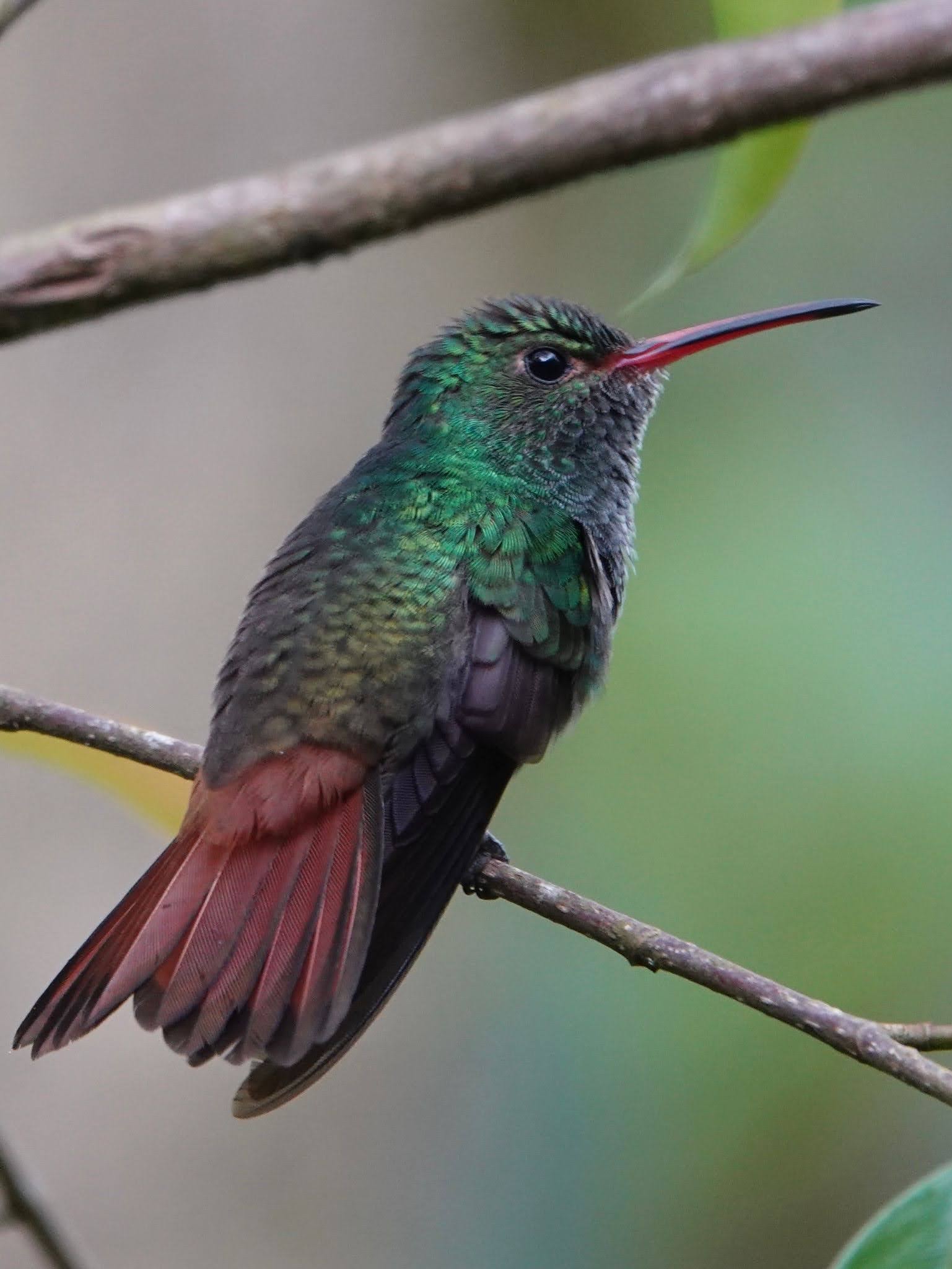
Then we started to see the new-to-me (life) birds: Yellow-bellied Elaenia, Red-billed Pigeon, Rufous-tailed Hummingbird—whose flashy tail would become dazzlingly familiar in the coming days—plus the showgirl-plumaged Lesson’s Motmot, its two long tails ending in fans suggestively drifting with the slightest breeze. The Lineated Woodpecker seems a quieter cousin to our Pileated Woodpecker. Saltators? There are more than one; our first was Cinnamon-bellied. And then we came across more old friends: Baltimore Oriole, down in the south for spring training, perhaps.
A few Chestnut-capped Warblers (recently split from the Rufous-capped Warbler) took the stage briefly in a corner of the gardens. Chestnut-sided Warblers also took roles in the chorus: they had not yet put on their vivid courting plumage, so had to be identified by their calls.
We arrived a day early for the official start of the Holbrook Travel tour, Introduction to Neotropical Birding—already, I had several life birds. The casting call for favorite bird of Costa Rica had just begun, with those auditioning living among a variety of forests and even different biomes. My top species switched daily.
One target, however, was constant. As we dropped from the mountaintop to the Savegre valley, Jorge asked our driver to stop at one of the many bends in the road. Stumbling out of the van and fatigued after an already long day, I still was eager to possibly spot the Resplendent Quetzal. A French-accented photographer showed some of the group an image of the rare bird he had captured with his zoom lens deep in the brushy forest. The sunlight began to dim behind the high ridges—and Jorge told us we would have more opportunities.
The next was at 5 the next morning, when we met to be ferried back to that “Curve of Cats.” At least four other tour groups of bird-watchers flocked on the road; our crew clumped together and clomped, quietly, to an open spot.
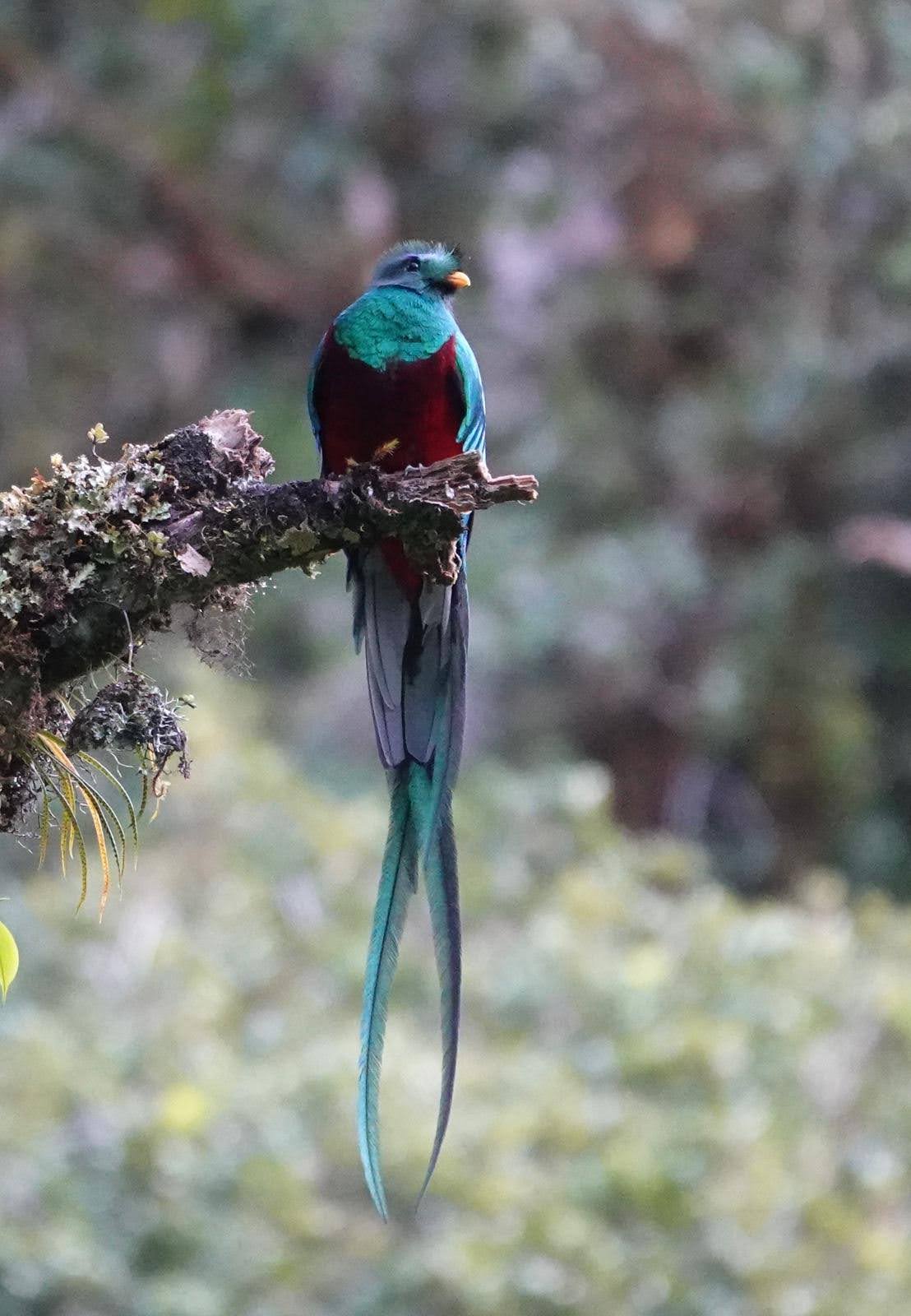
After some time scanning the wild avocado trees, someone spotted the flamboyant bird and his mate. His short green mohawk of feathers stood up like a crown; the electric green feathers reaching from his back to finger his scarlet breast could have been a royal cloak. The Resplendent Quetzal was not that large but his loooong tail covers completed his regal look. Awesome.
Until he and his mate flew off, they were watched through binoculars and spotting scopes by more than 40 human subjects, who had traveled thousands of miles from the States, Canada, France, and Germany for a glimpse We were caught in his thrall. Jorge and the four other Costa Rica guides, connected by threads of Spanish, had shown us royalty when the Quetzal emerged for his early morning audience.
While she was thrilled with the Quetzal, for another person among the dozen participants (aged late teens to late 60s), the answer to her most-sought-after birds was always the same: “Hummingbirds!” Petite and as full of energy as her target birds, she and the group, under Jorge’s guidance, saw 21 species of hummingbirds during our 8-day trip. That’s 42% of Costa Rica’s hummingbirds, which are only found in South, Central, and North America—or, America, as Jorge would remind us.
After all, in Costa Rica, “Americans” does not refer to just U.S. citizens; the term includes everyone from Barrow, Alaska, to Tierra del Fuego.
Choices
“You have choices,” Jorge tells us, as he describes a couple of possible outings for the coming night, following dinner, and next morning, at 6 a.m., for a stroll around the rainforest habitat crowded with trees, vines, and bushes in Selva Verde. The choice for my husband and me was not to go on the night walk—lizards and frogs were the headliners. Then, the next morning, as the tropical rain pounded outside our windows, we chose to sleep in a bit. Even in that hardy band, mostly composed of a bunch of friends from Denver, Colorado, no one jumped out of bed that morning. Was Jorge disappointed in our lack of dedication? He didn’t show it—just welcomed us “amigos” to coffee, breakfast, and the balcony with a view over the bird feeding station.
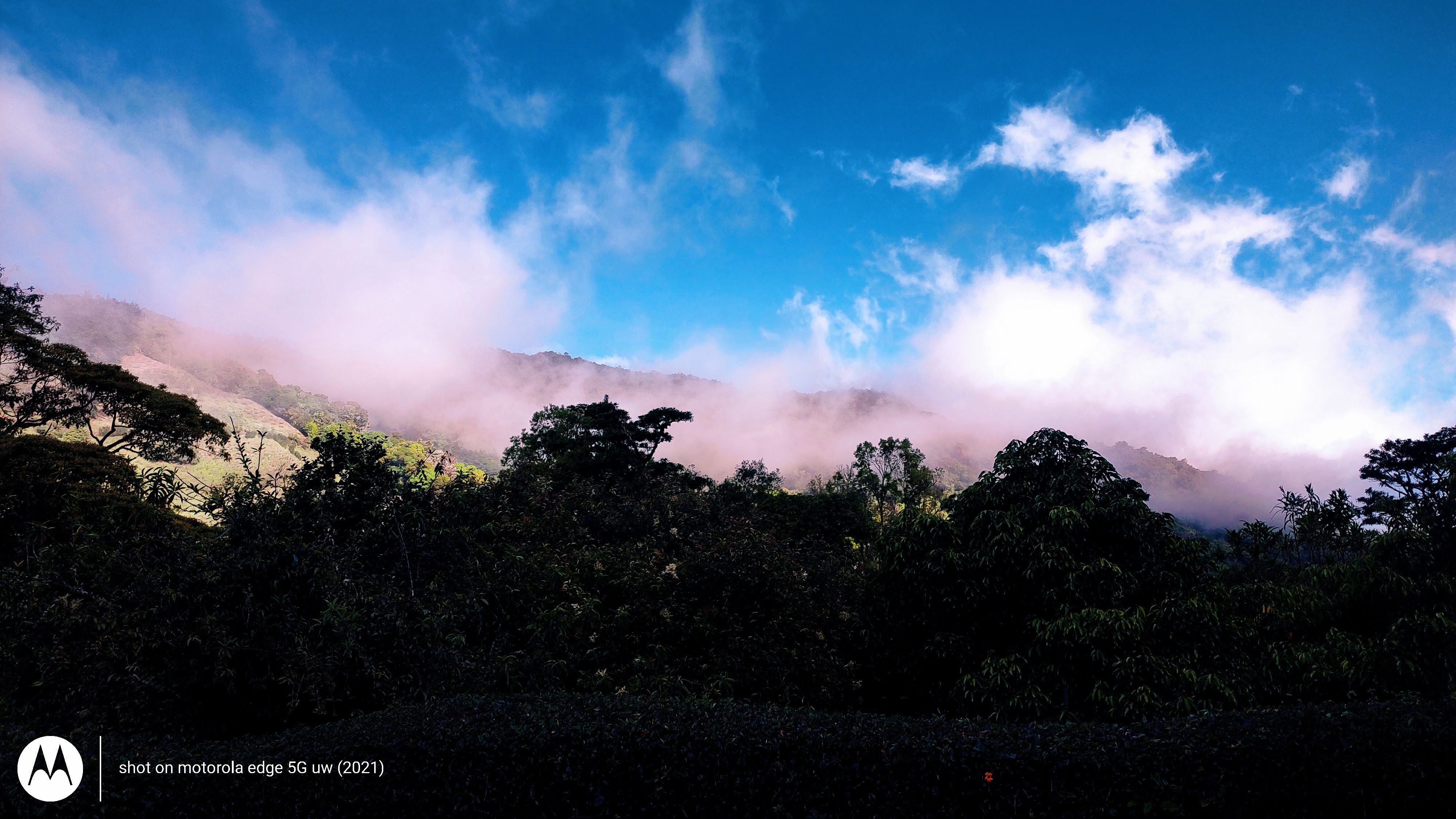
Our bird-licious trip, crowded with opportunities to soak up natural beauty from the Caribbean lowlands, nearly at sea level, to the cloud forests at 7,000 feet and higher, was all I could have hoped for: the group saw a quarter of the bird species in Costa Rica, Jorge told us, and 37% of the endemics—birds found only in this small Central American country. In general, the people were as delightful.
At the grocery in Puerto Viejo*, a very tall employee saw us hesitating with our three bags of coffee before the cash registers. “Oh,” he said and paused. His eyes searched the ceiling for a moment: “Do you have the credit card?” “Yes!” my husband answered, happy to have English spoken to him. He pointed us to the self-checkout, hovering behind us to ensure the transaction proceeded as it should. Success, and we headed for the day. He called out: “Have a nice day!” He seemed genuinely pleased to help us visitors from the States. When we turned and answered, “You, too!” he grinned broadly. So fun to have that language training come in handy for him and us in this smallish town.
Typically, the Costa Ricans we communicated with were Jorge and the staff at the three places we stayed: very friendly, very well-educated, and very open to outsiders. I suspect they have nice homes and, like Jorge, thriving families. Affluent people enjoyed homes behind fences or gates; still there were others not as fortunate.
“The poor you will always have with you.” While that is not a Gospel recommendation, as I had been reminded at a past charity event, it contains truth. Indeed, struggling people are here as well as in San Francisco, Seattle, and St. Paul. Jorge pointed out corrugated metal shacks filling a stretch of median on the Pan American Highway. Doors opened to the sides: Otherwise, the inhabitants—squatters from Nicaragua, or impoverished folks from the Costa Rican countryside—might step out directly into traffic. Beggars were walking the streets of San Jose, too, along with police officers, teenagers shopping and strutting, professionally dressed folks, families out for a Saturday outing during this break in the school year, and, always and nearly everywhere, guys on little yet loud motorbikes, spewing dark exhaust.
Transforming
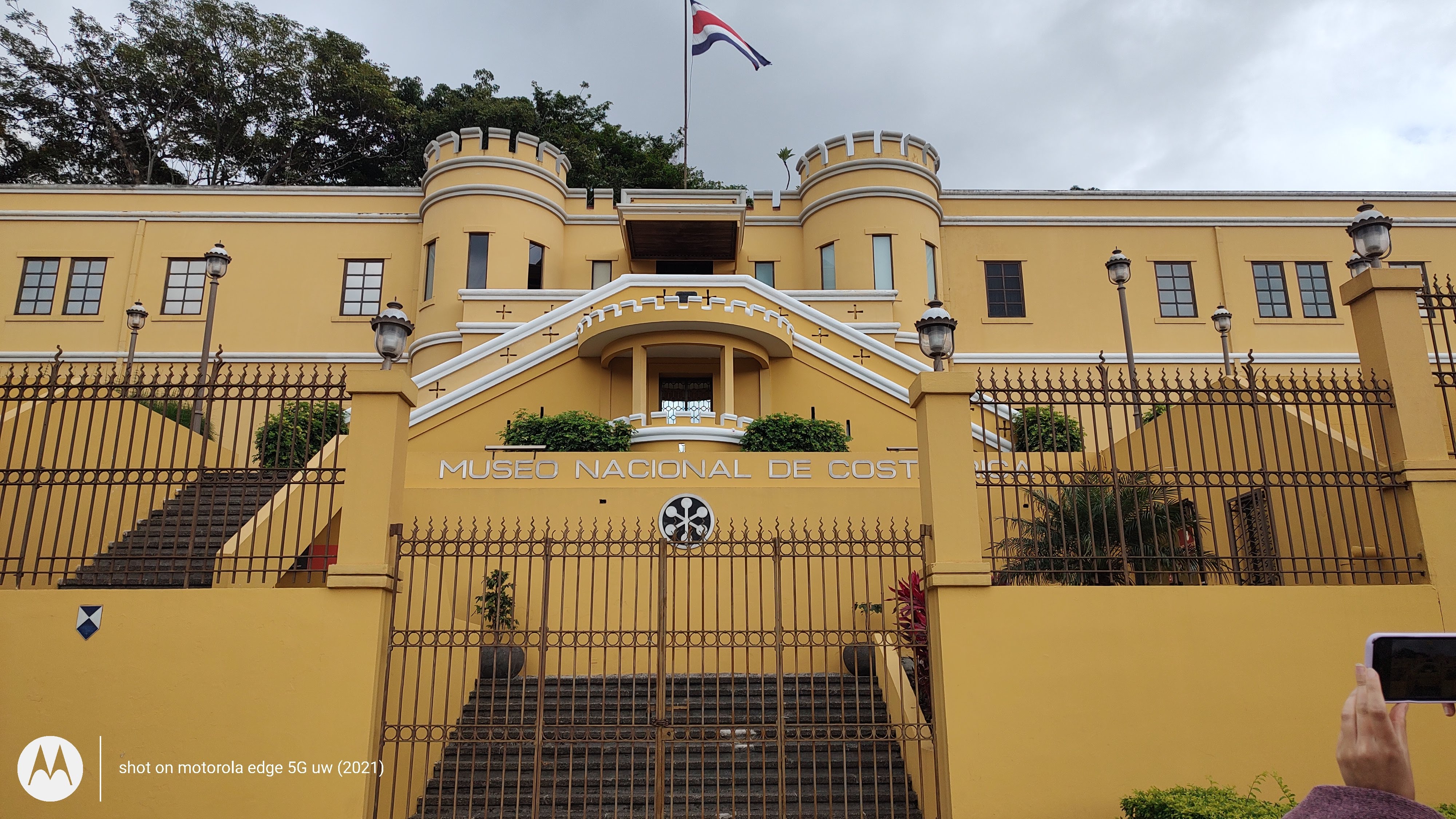
Costa Ricans have made a lot of choices over the decades. When coffee exports filled their national and family coffers at the end of the 19th century, they built extravagant, European-style public buildings and even homes, honoring Art Nouveau images of the feminine and fauns, great musicians like Beethoven, and castle-like headquarters for the army.
The army was abolished after the 1948 revolution. Today, the people receive free health care and free education, through college.
A mistaken government policy for agricultural development—clear a piece of land and it will be given you—reduced the country’s forest cover to only 21% at the beginning of the 20th century. Efforts to reverse that policy have, by 2025, brought trees and tropical plants back to 57% of the land.
Eco-tourism, according to Jorge and Pablo, supports a huge number of Costa Ricans and a big chunk of the economy. The results are stunning refuges, research areas, and resorts. Even so, semitrucks haul cargo cross the overland “Panama Canal,” roadways that link the Caribbean to the Pacific. Wouldn’t trains improve the air pollution and the traffic backups? One train track that was ruined in the myriad tremors and earthquakes Costa Rica experiences remains to be repaired, many years after.
The rainy season formerly was interrupted by a dry season, historically beginning around the turn of the year and extending a few months. Now there is a “less-rainy” season. Floods and hurricanes are more common than they were 10 years ago. Huge trees downed by winds and roadside evidence of mudslides point toward some of the costs caused by a changing climate.
As I observed the scene during just an 8-day trip, I was recommitted to cut my fossil fuel use and fight the effects of climate change to help our neighbors around the world—and ourselves.
Now, I will go donate to the Arbor Day Foundation, the Nature Conservancy, or some other environmentally friendly nonprofit to plant some more trees to make up (a bit) for our plane travel here and back.
As Jorge reminds us: We all have choices.
 Allison Campbell Jensen