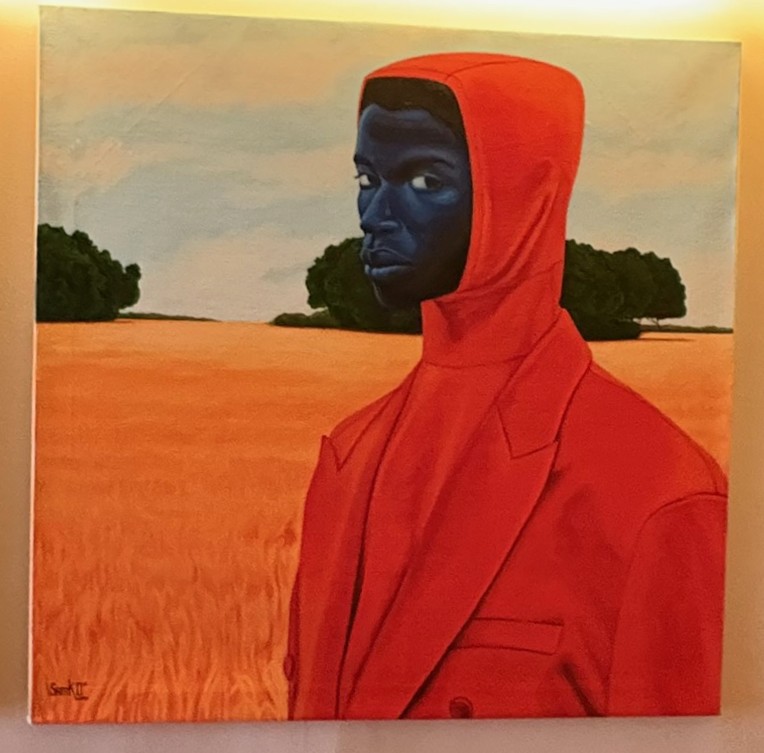
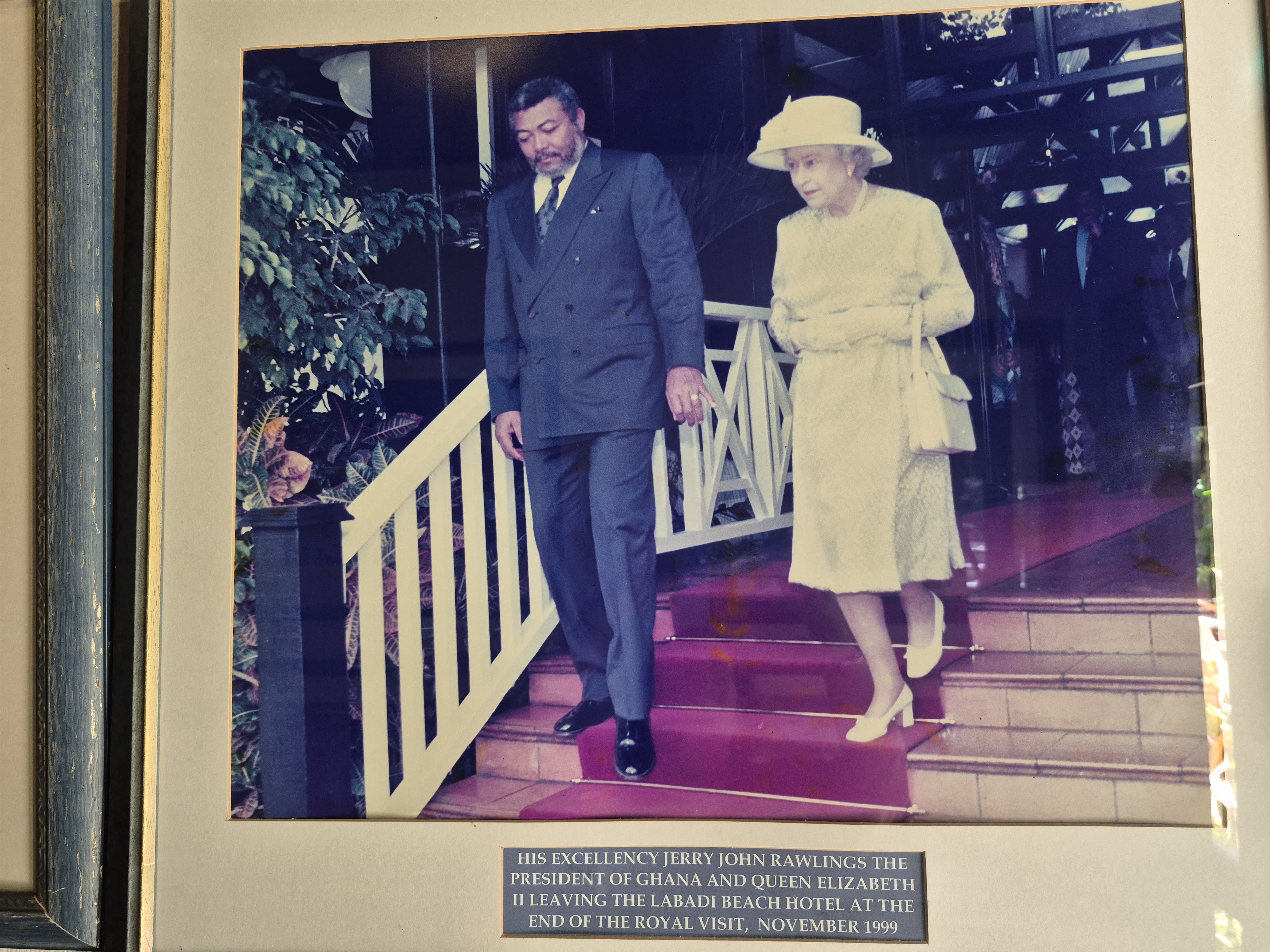
Photos of Queen Elizabeth II can be found in the 5-star Labidi Beach Hotel in Ghana—as well as contemporary paintings by a local artist of young men, one in a red hoodie staring back who looks a lot like my sister’s young friend in Memphis.
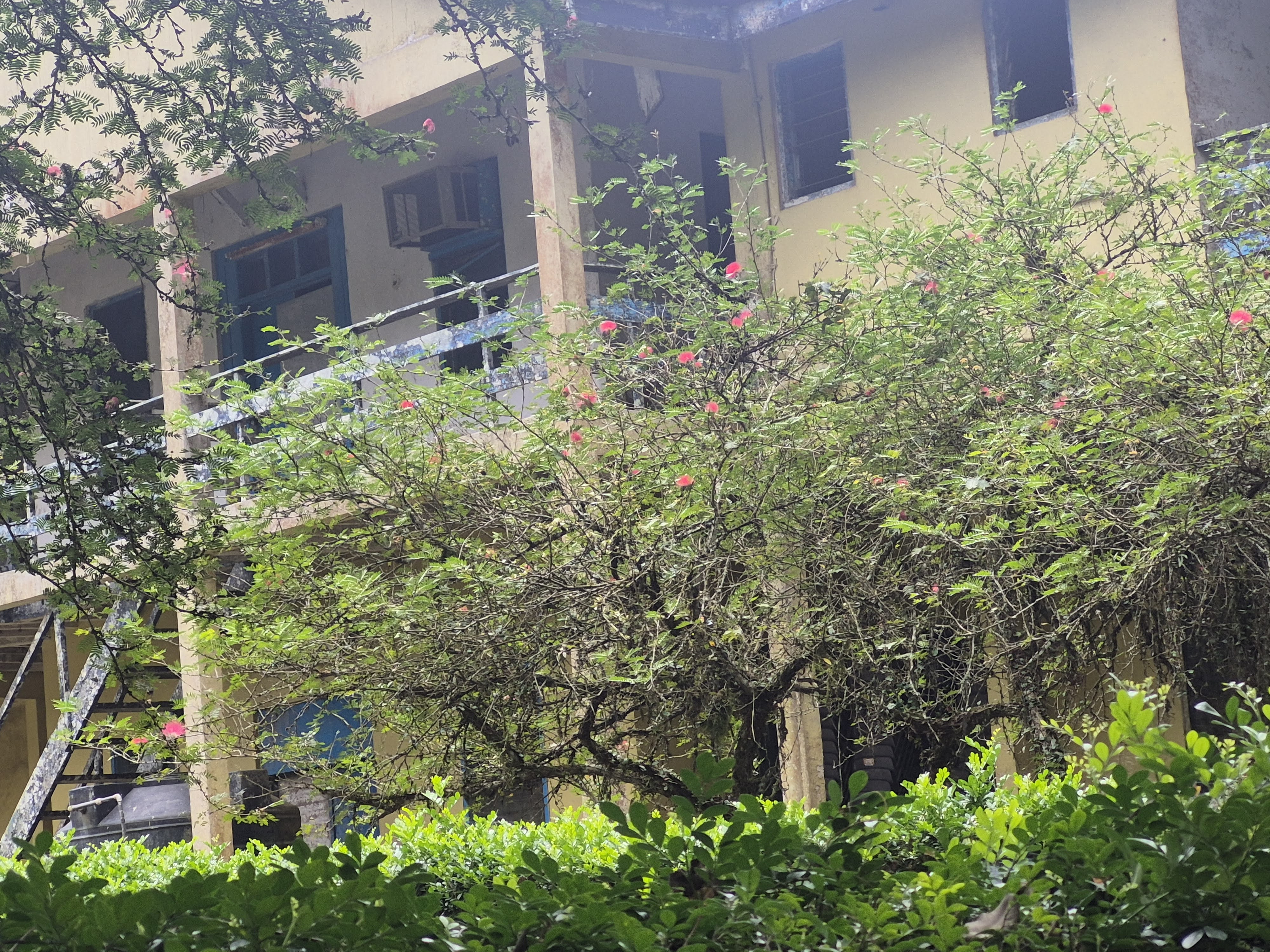
Contrasts from the Colonial era and today’s connected world abound. The primary building of pre-Independence Eastern Regional Hospital, Koforidua, in the hills east of Accra, stands squat and solid, with corridors painted a sickly green, crowded with mothers, mothers-to-be, babies, and family members. Upstairs, away from the wards, medical director Dr. Saanwie Aiden sits across from an array of screens, displaying the realities beyond his cramped yet blessedly air-conditioned office.
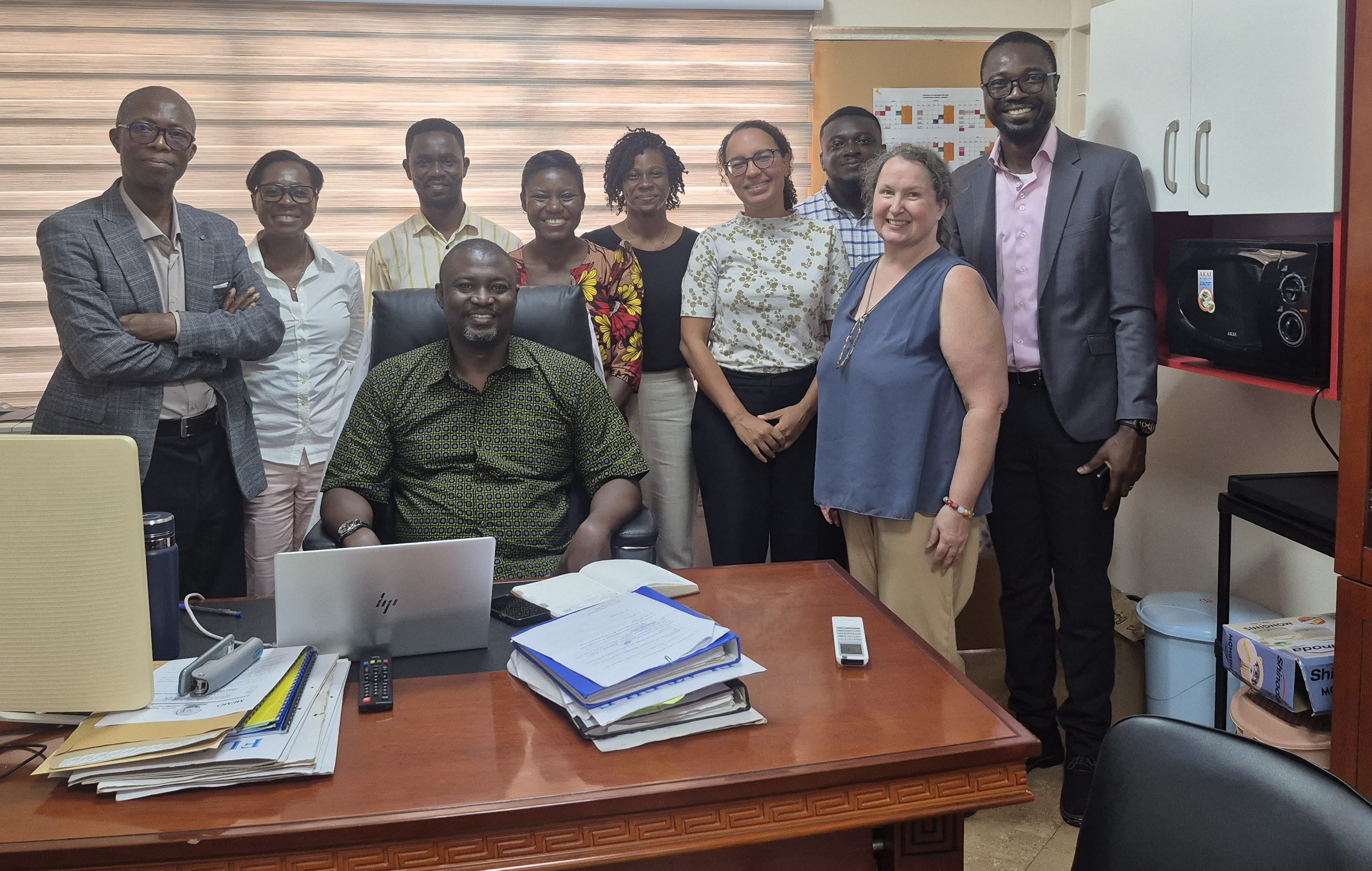
Talking with the research team from Universities of Ghana, Utrecht, and Memphis, Aiden says: “It’s an honor to come when most of the work [on the SPOT project] has been done—the food has been cooked.” Severe Pre-eclampsia adverse Outcome Triage (SPOT) seeks to improve prediction and treatment for one of the top three causes of death and disease among pregnant women.
A portion of SPOT’s work is presented in the Creche conference room, where a wall-sized screen projects the laptop presentation for all the health-care workers to see. As my sister Patricia Goedecke and her colleague Kingsley Boakye prepare to present, the laptop and the screen do not immediately communicate.
“Tech issues, naturally,” Joyce Browne, professor and researcher from the Netherlands, tells the 40-some people gathered. “Any country, any hospital.”
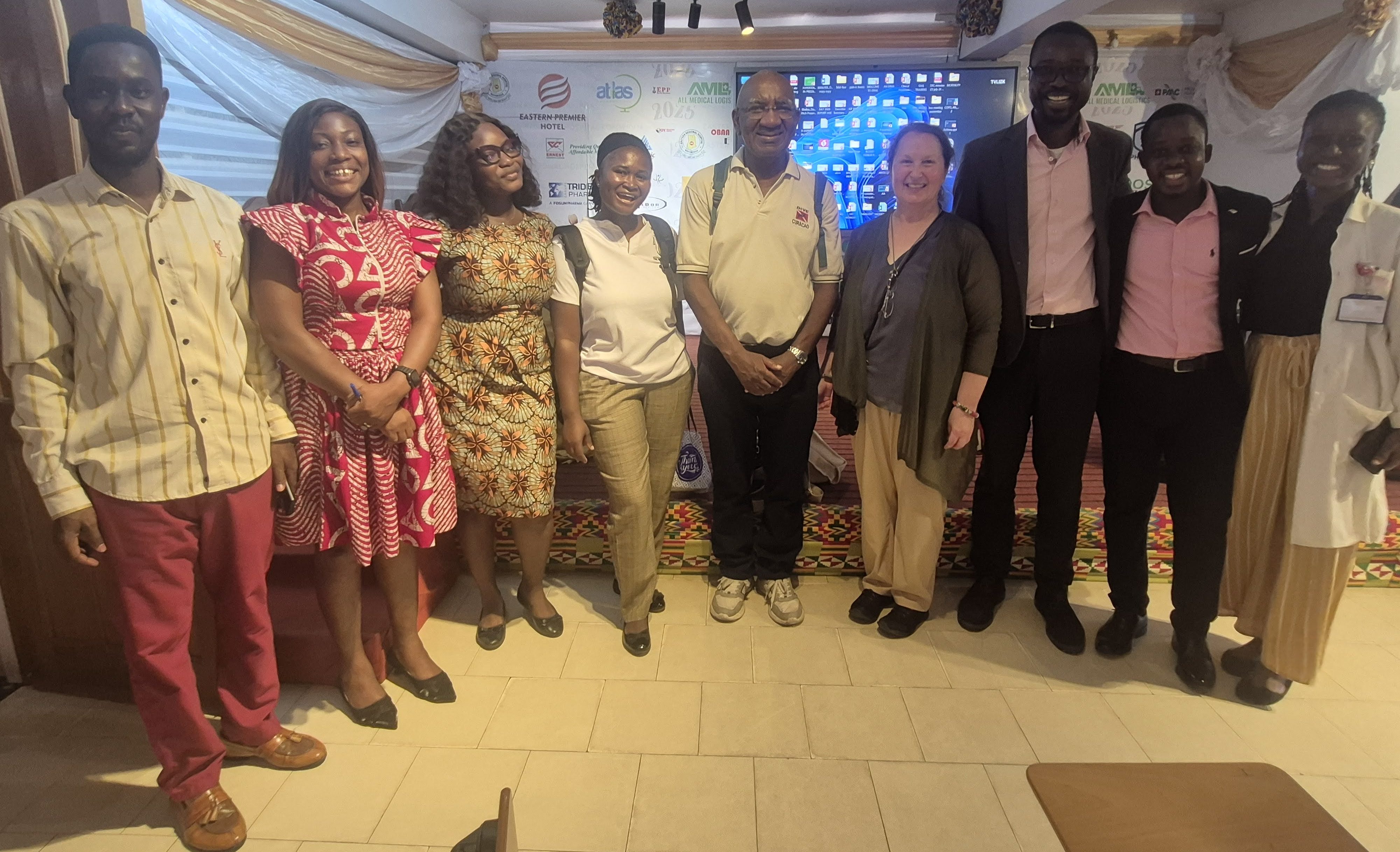
Discovering more about the dire diagnosis is the task of an international collaboration of scholars and health care practitioners that includes researchers, patients and their doctors and nurses in Ghana, experts in public health from Memphis, Tennessee, and researchers in public health from the University of Utrecht in the Netherlands.
My sister, “Trish,” is a biostatistician who wrestles with huge sets of data to uncover trends. She and colleague Kingsley, from the Netherlands, reveal findings about genomic factors in mothers and the children they carry that threaten their lives with pre-eclampsia. This disease causes high blood pressure, which can harm the hearts and kidneys–and even lives–of mothers-to-be and their fetuses.
Compared with world levels, pre-eclampsia is about twice as prevalent in Ghana—and in Memphis, Tennessee, a majority Black city in the United States, where Trish lives and works. Her mentor and a lead researcher, Claire Simpson, first arrived in Ghana about 10 years ago, based on an educated guess that the diaspora of Africans to North America, via the slave trade, continues to connect the populations genetically.
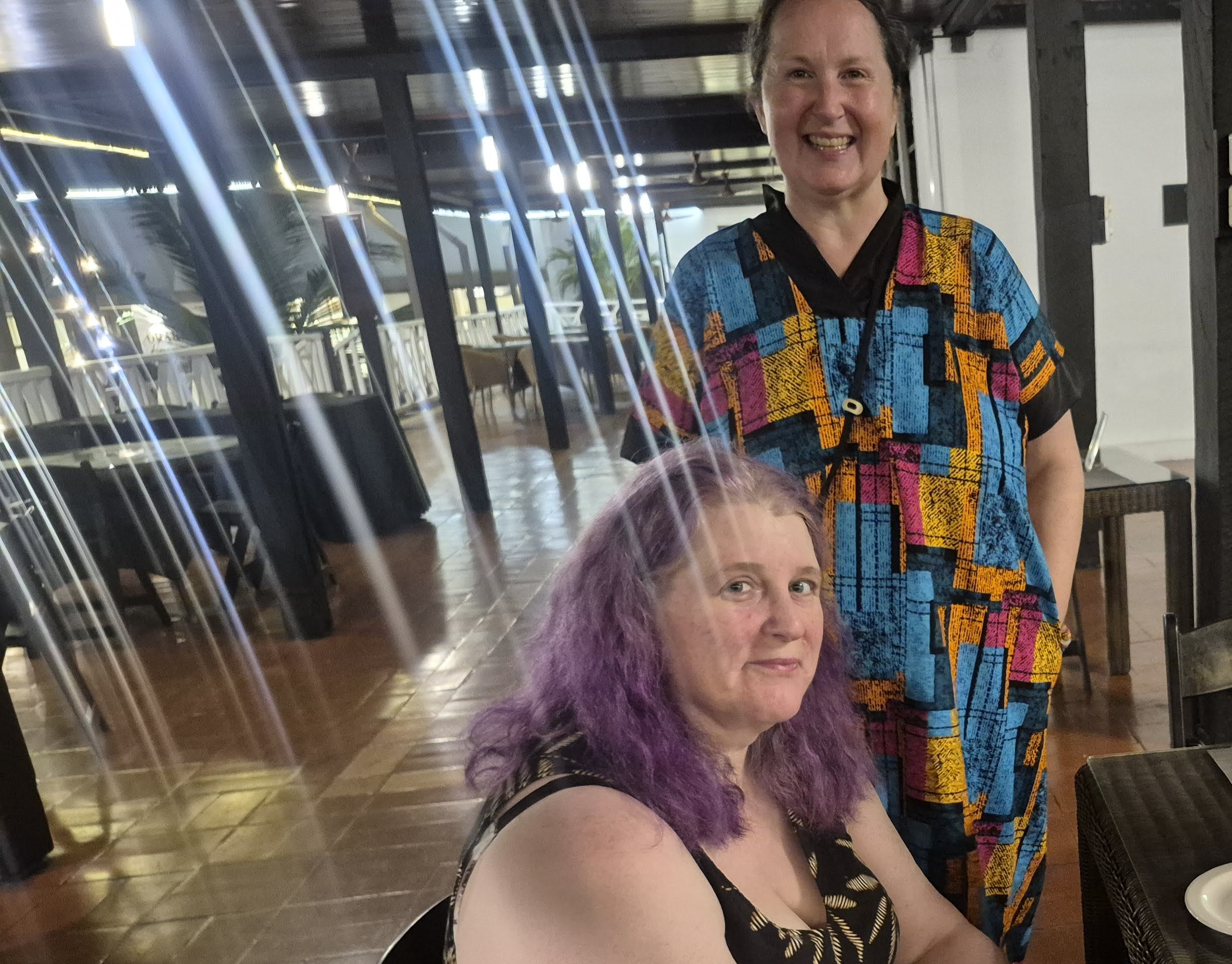
I am just along for the ride. And what a ride!
Invited from my home in Minnesota by Trish to accompany her, I carry bags and water bottles at times, joke with groups posed for my photos, and take notes—because, as a retired journalist, how can I not?
Before the University of Ghana van and driver takes us to the Eastern Regional Hospital, one of the research team has us join in prayer for our enterprise and a smooth journey.
Good idea.
Easing the van out into the shuffling, shuttling, shifting snakes of traffic, I can see why many of the transport vans boast window sticker appeals to God or Jesus or Allah. When the traffic light turns red, the multitude of cars, vans, and trucks settle into lanes, for a typically long wait. The motorcyclists keep twisting through while people carrying cold water, warm bread, fruit, tissues, and computer cables scurry among the vehicles, seeking sales. Seeing women (and a few men) carrying basins full of bottled and bagged water in basins on their heads seems an astounding feat: Rings of fabric keep the basins atop their heads. When they stop for a customer, they reach up and grab a bottle, hand it over, take the money, all while the rest of their goods stay high and steady.
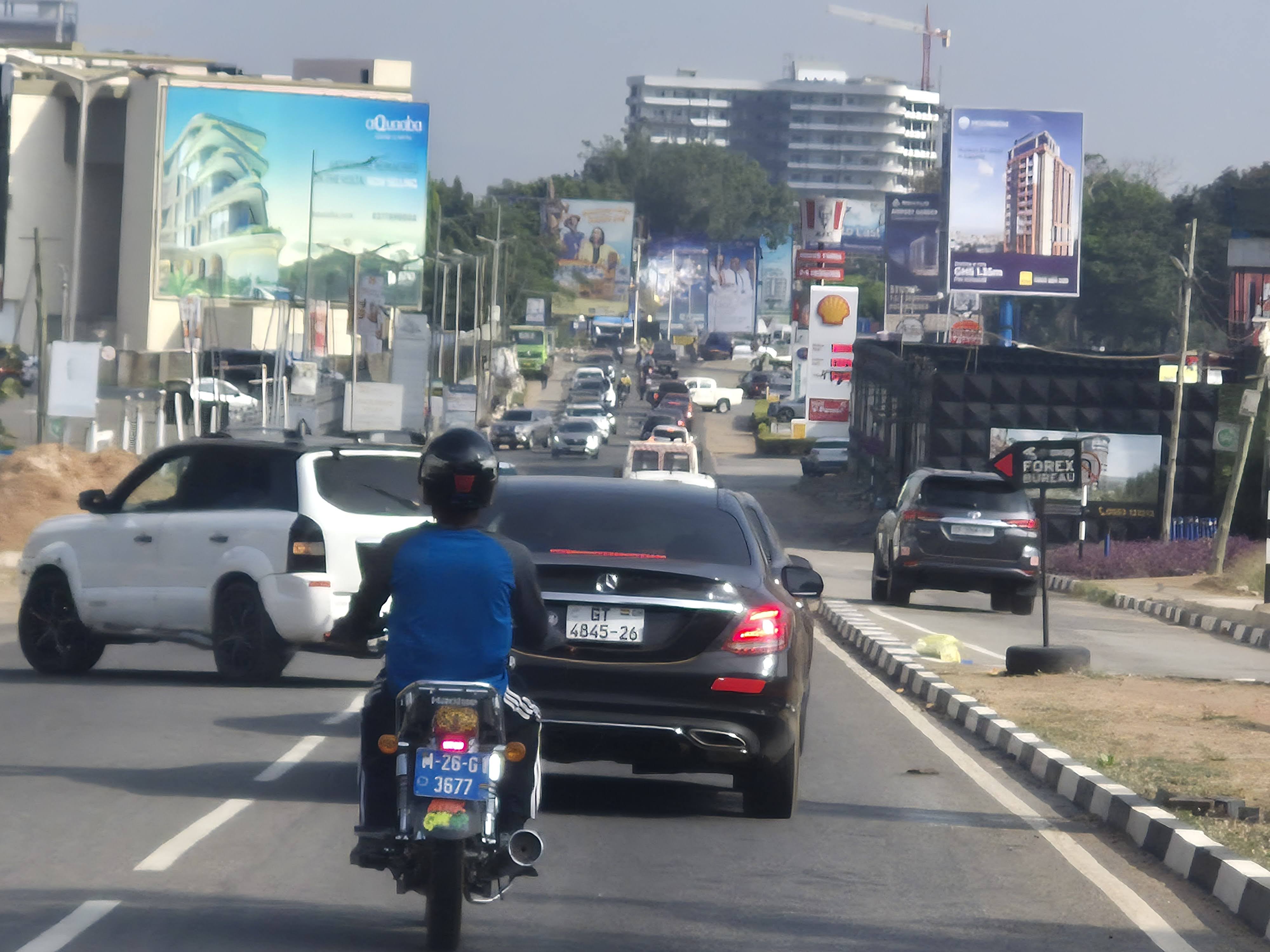
Beautiful balancing and such grace under pressure, because the light will change and they will need to skedaddle to safety. They do this dangerous work until they can afford a tent on the side of the road or even a small shack for selling: One such open shack is labeled God’s Gift.
One steamy afternoon—humidity in Ghana in mid-October is super high and daytime temps reach the high 80s and 90s, Fahrenheit–I paddled in the hotel pool. Other days, I went off with Trish and crew or took in the sights and sounds of this buzzing lodestone of a West African country.
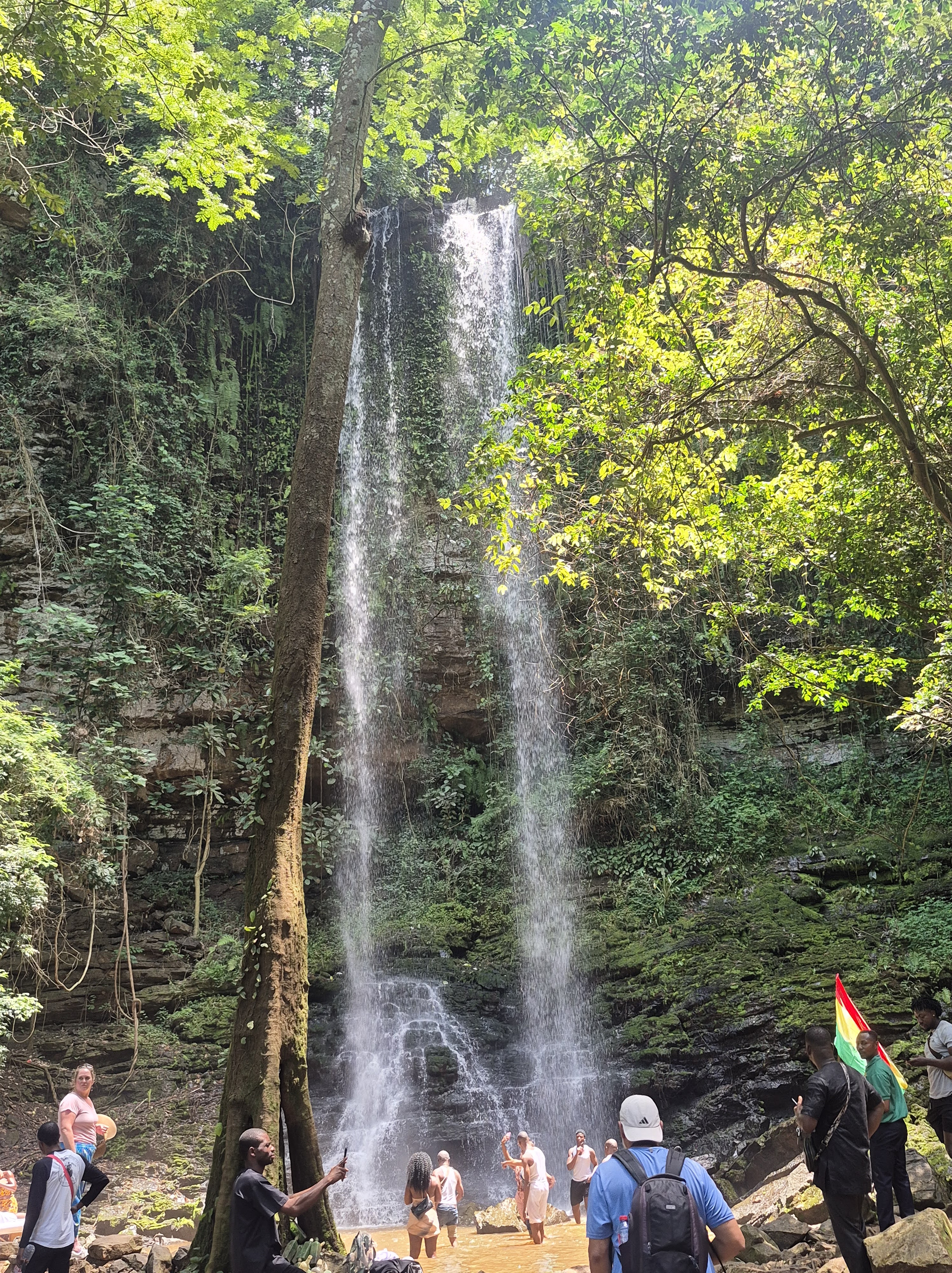
Today, Ghana attracts immigrants from other West African countries, looking for work or a more stable place to live, as it once drew Europeans seeking anything from which they could profit. The Portuguese came first—and began the infamous trade in people in the 1400s. Then came the Swedes, the Danes, the Dutch, and, last in the line of colonial rulers, the British.
The locals I met were proud of Ghana’s declaration of independence in 1957, impressed by their own military, and sure of their country’s beauty and abundance. They also love their automobiles. From the mountains, looking down at the sprawl of Accra, which slides north, east, and west from the turquoise waters of the Atlantic Ocean, I was reminded of the city of Los Angeles—even to the pall of air pollution that I remember from living there in the 1980s.
Traffic might seem like a free-for-all, but there is some sense to it. Vans jammed with riders pull off the boulevards to let out some and add more—the main transportation for many in Accra. The waiting folks know which van to take.
As foreigners staying in very nice hotels, our typical choice is to hire a car and driver to take us where we wish to visit. Car service is not cheap, but it is reliable. When we tried to hire a local van that promised a trip at half the price, the van never showed up. Fortunately, the front desk staff found someone to take us on the four-hour trip to the ill-named Castle.
After waiting half an hour, Trish and I bundled in the back seat and went to pick up our friend Weston Browne, Joyce’s father. At 70, he had the straight posture and poise of a professor who for decades had taught in classrooms and spoken during faculty meetings. A native of St. Vincent in the Caribbean, his face at times relaxed into a gentle smile, too. Weston took the front passenger seat.
Once our driver finally cleared the streets of Accra, Weston was our sentinel, watching as the car sailed over red clay medians between portions of a new freeway to be. While I was gaping at the goats frisking among country people along the road, young men revving their motorcycles next to the market road, and children walking out of their tiny red-clay homes dressed in pure white for church that Sunday morning, he was alert. I like to think his influence and stature as an older person made our driver more cautious–but it was a little hard to tell during a long and bumpy four-hour drive to the former site of capture and sales of humans.
The Cape Coast Castle was built above the sea; from its blindingly white walls that enclosed the colonial rulers, it looked south over the bright blue-green waves beating on the shore. The walkways, made from large paving stones, radiated back the heat of the sun. The old cannons and cannonballs were still in their places, ready to fend off attackers from the Atlantic–and protect the ships that came for their human cargo.
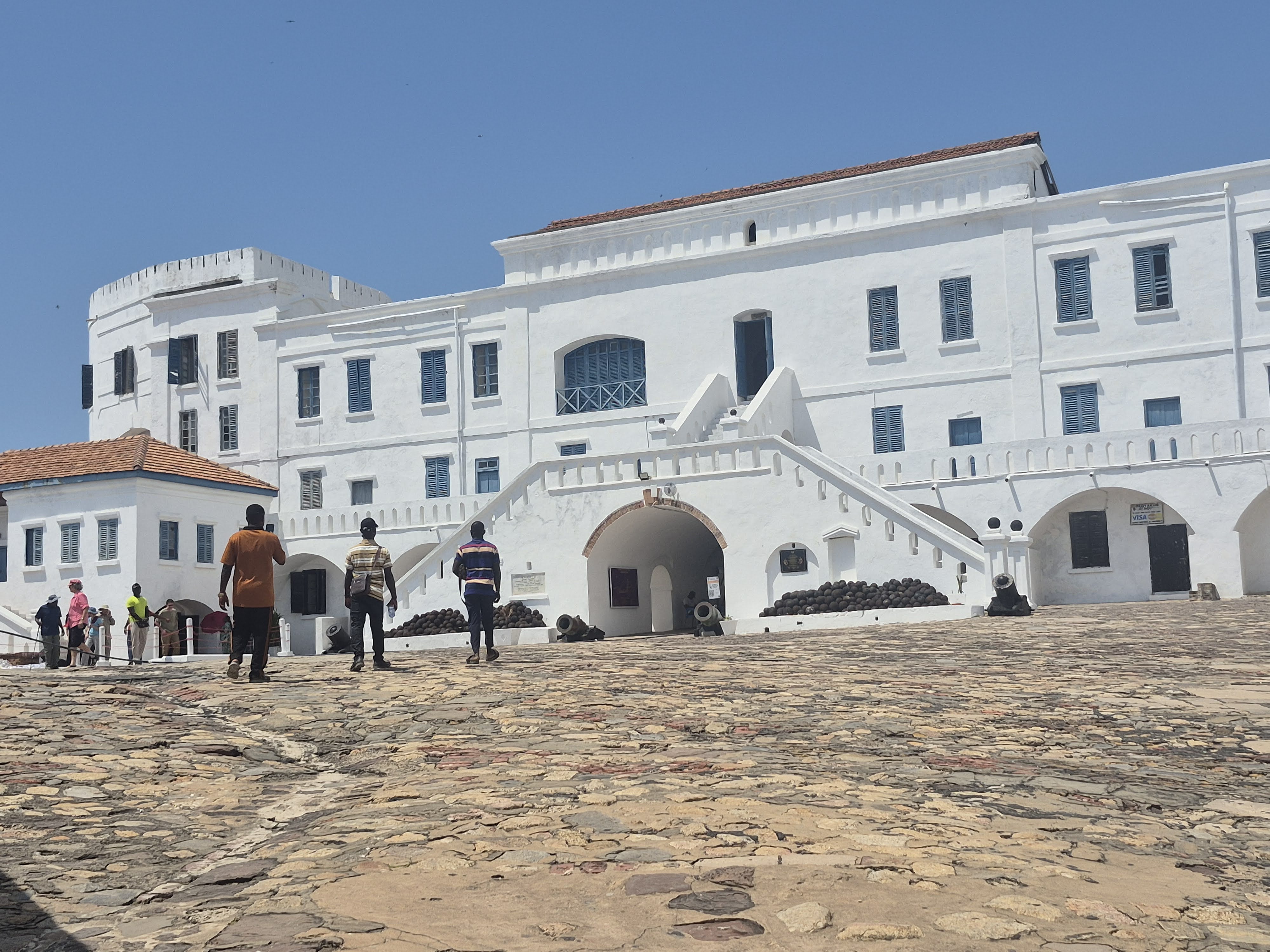
A bit tired of being accompanied everywhere by guides and drivers, I wandered through a few open cells. One was entirely empty–except for the shadows of despair. Later, I learned that the men who tried to fight the British would be put there, with no food and water, to die. In another cell, bigger with a sliver more light, memorial wreaths lined the walls–joining the visitors from Ghana, the United States, European countries, and the Caribbean with those who had suffered, shackled, awaiting their deportation to unknown lands.
Weston let Trish and I wander a bit, then wisely urged us to join an organized tour of the Castle. At first, just a few of us followed our young guide as we walked, more drifted into the net he cast. After stopping to admire the plaque commemorating the visit by President Obama and his family in 2009, he began to tell tales from the dungeons and from those who advocated enslaving people from Africa to help the Europeans conquer the Caribbean islands and advance their interests in North America.
Captives often arrived after wars between tribes: the conquerors transported people to the colonist rulers.
Going down into the dungeon, we slipped a bit on the damp stone steps as we slid into the dark. Turning right into a doorway, we stepped up into a room that, with 15 of us crowding in, felt a bit small. Imagine 50 men in here, said our guide. He turned off the lights, and only three tiny slots let in light and, maybe, air.
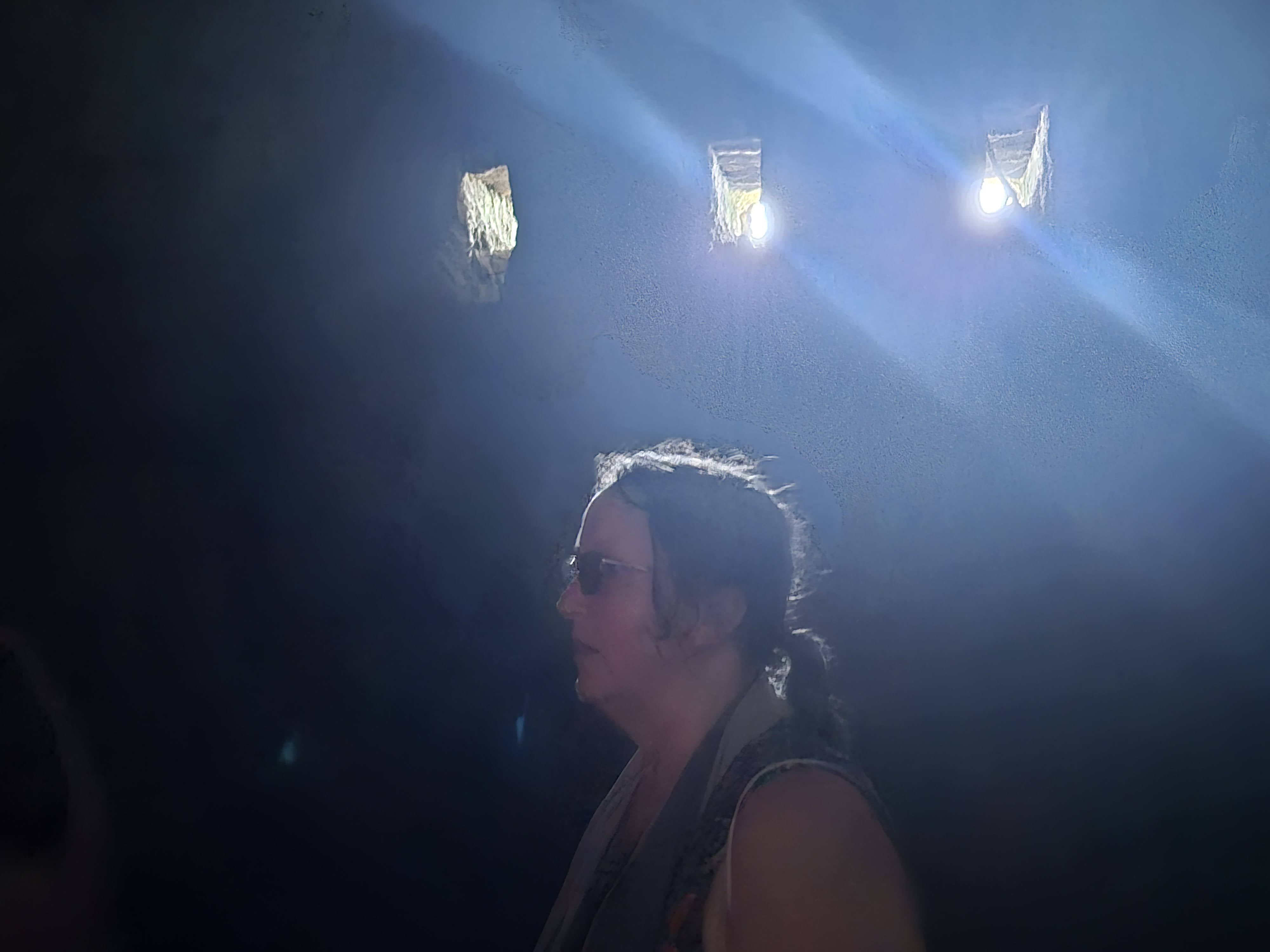
He turned the lights back on. The scene wasn’t much brighter.
The cell appeared to be carved out of stone, divided by a narrow brick trench built by the colonial overseers to carry away the prisoners’ waste, which was not nearly big enough. The 50 or so men would be standing in their shit and piss; there was no room to sit or lay down, even for those who took ill. They waited and wailed, groaning in the dank and stink.
From there, our guide led us to another room, where an altar, perhaps, was set up with a white covering.
Not an altar: certainly a focal point. The goods–the people to be sold–were displayed there to the buyers. If purchased, they were led down a tunnel (now partially blocked) to await their ship for the Middle Passage across the Atlantic.
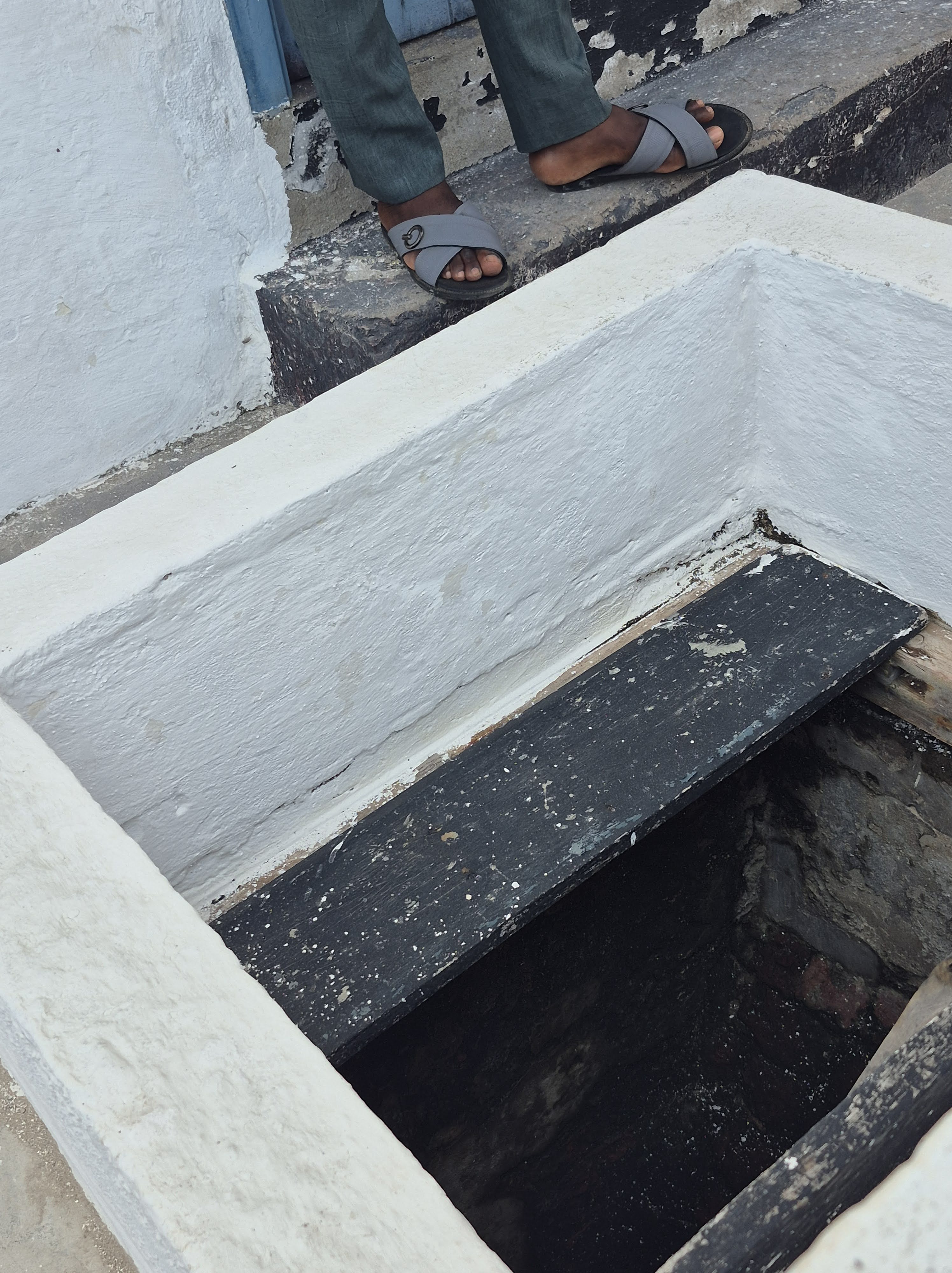
Between the cell and the selling floor, a larger room had a rectangle the size of a large desk in its ceiling that let in light. As it happened, it also released the stench, the moaning, and the fear from the men who had been captured.
The British, oddly, built their Church of England sanctuary above the dungeons, with the steps to enter right by that hole between Hell and Heaven. Did the colonist parishioners hear and smell the evidence of their criminal enterprise?
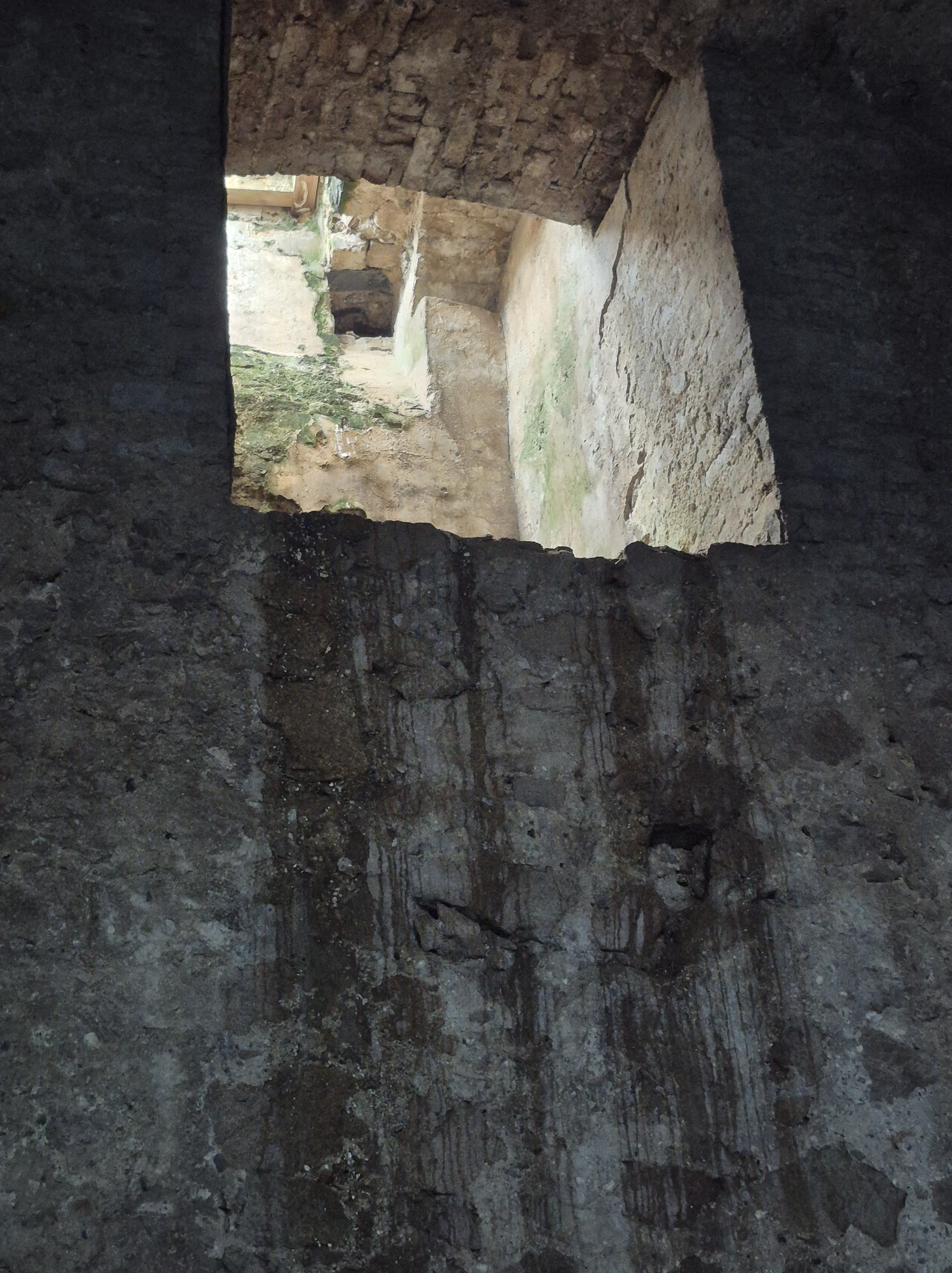
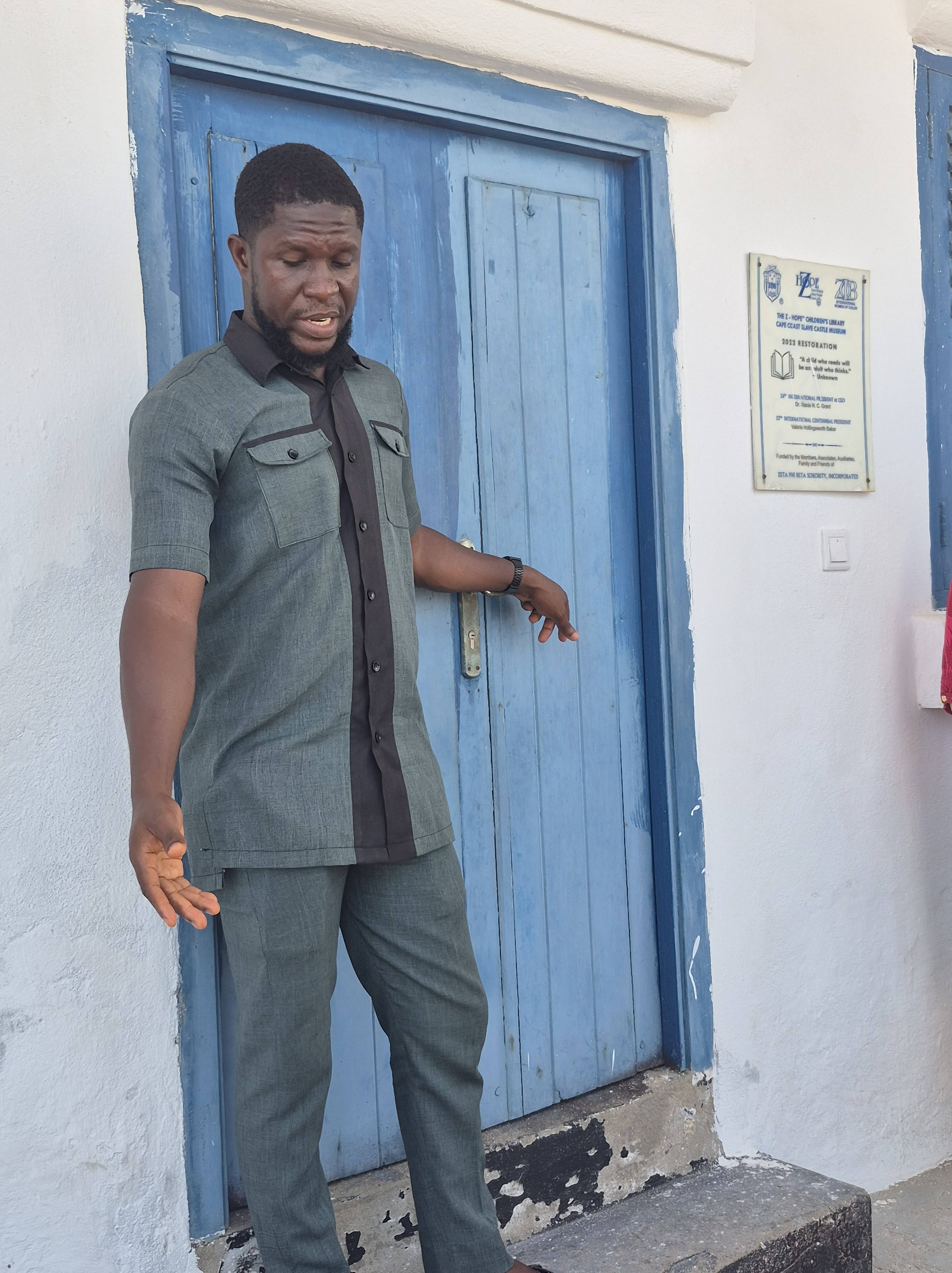
The bedroom for the ruling Governor was two stories higher and opened with five windows onto the sea breezes. The slaves might have seemed far away, yet the troops in the Castle could easily be called from above, if attackers came by sea or captives became unruly.
Women, kept separate from the men, were close to the English officers. They were preyed upon, raped to emphasize their powerlessness, and some bore children for the British–one of whom became the final rector of their Anglican church.
Everyone who was chosen for deportation walked through the Door of No Return to the ships. In 1998, it was transformed into the Door of Return, “when the remains of . . . Madame Crystal from Jamaica and Samuel Carson from the United States were brought back through this portal to reverse the jinx of ‘No Return,’ so that the descendants of the survivors could come back” to Ghana. [from Cape Coast Castle & The Trans-Atlantic Slave Trade, by Kwesi Essel-Blankson]
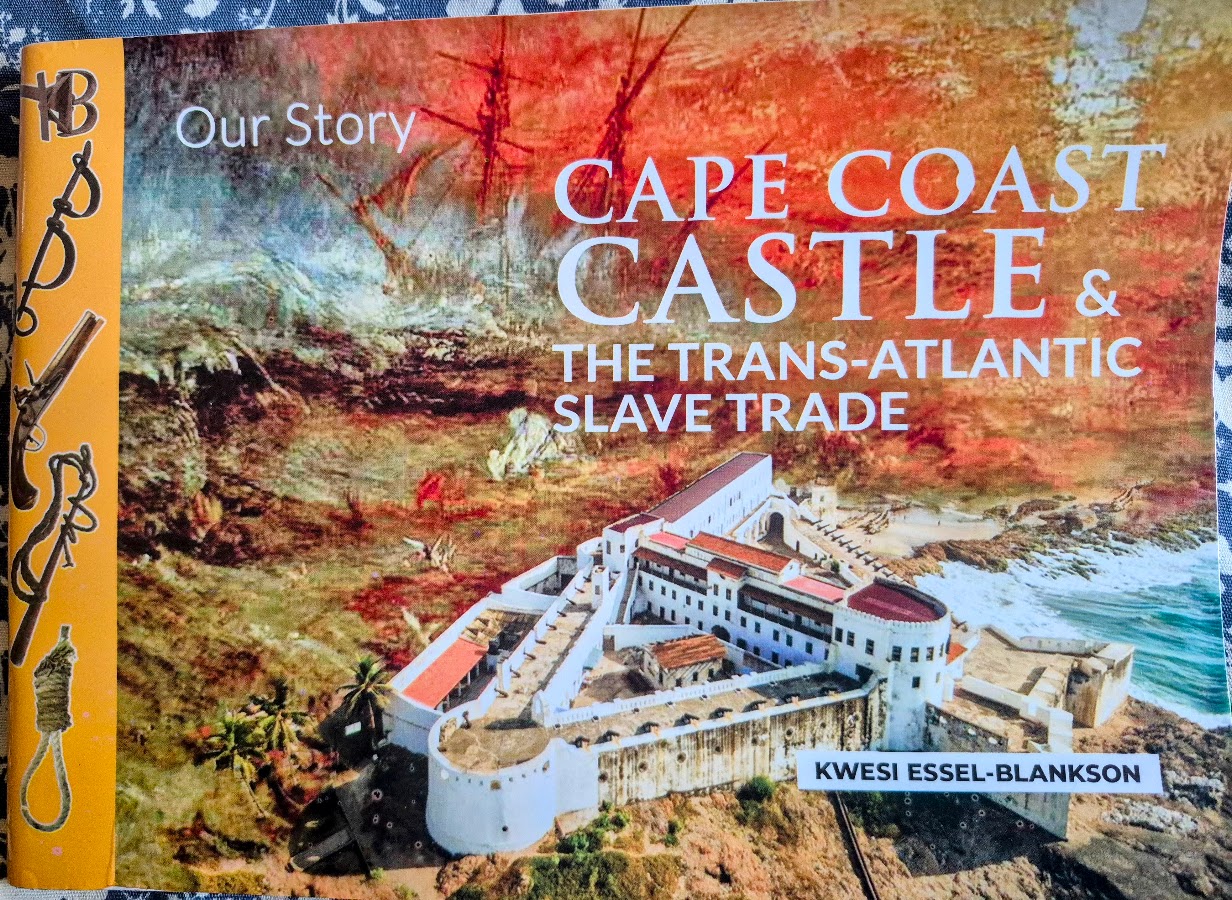
British slave trading ended officially in 1807. The Cape Coast Castle was converted into a British colonial administrative center, with a court meeting in the Palaver Room where England’s common law was the rule. Clotilda, the last known ship carrying enslaved people, left Africa for North America in 1860.
The colonial capital was moved to Accra in 1877. The scars of colonialism remain, yet the people of Ghana stand proud and bold in their developing wealth, their flourishing education system, and their cross-tribal unity.
As hosts of an international conference on public health, they are advancing connections and building knowledge for all. The crossroads, formerly the exploited Gold Coast, has grown into a flourishing West African nation.

